M1938-1940-Model-T
Ford Model-T 1908-1927
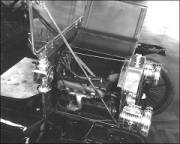
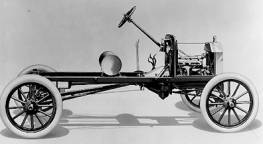
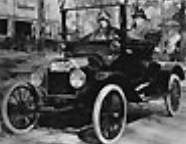
Early model with Kerosene lights early model basic chassis Step-in out with the Mrs
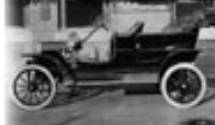
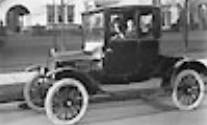
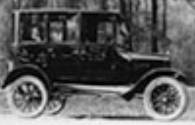
Early Touring Classy Coupe Late Sedan

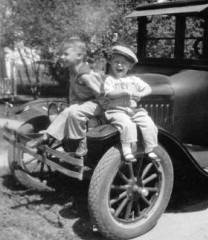
Henry’s 1927 end of the line, standard option without bumper Deluxe with bumper

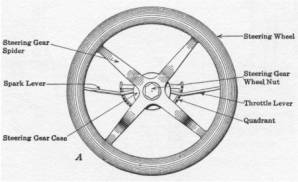
Before cranking to
start: pull “drive” lever vertical (out
of gear), lift spark and throttle levers up to retard and idle.
Put leg over
bumper and push crank in to engage, grasp crank with right hand, MAKE SURE THUMB is on same side as fingers,
with left hand pull “bailing wire” to choke carburetor – then pull crank up
once to choke, release choke wire and up hard on the crank – in normal weather
a recently run car will start with one crank.
If necessary jack up hind wheel to serve as flywheel to help sustain
cranking power. The old girl shook and
dances impatient for the “starter” to scurry about to advance the spark, cut
back on the hand feed and be ready to drive.
You knew she was alive and ready to respond – and hoped nothing would go
wrong to cause you to get out and get under to fix your automobile. If low band gave out and you couldn’t pull
up a hill you’d turn about and back up. Henry sold them in any color so long as
it was black.
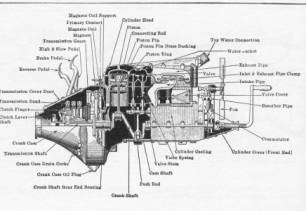
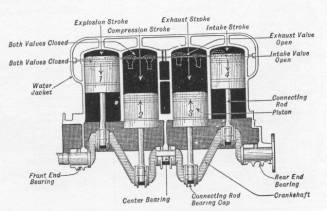
Connecting rods were the Model-T’s “weakest link” – Fords V-8 was “engineered” to solve that
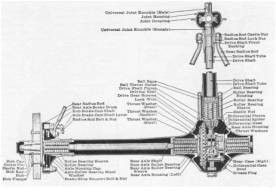
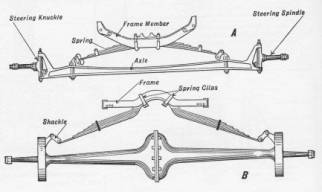
If axel halves were reversed motion would reverse – reverse peddle would cause forward motion -- learned the hard way. Henry was a master of reliable simplicity which enabled mass production at low cost.
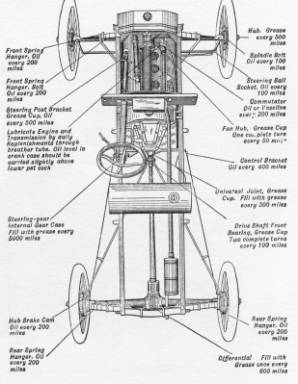
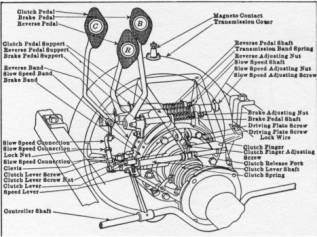
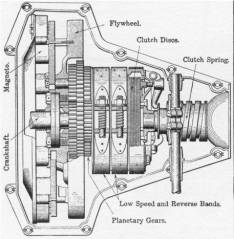
Press
left peddle for low gear forward, Middle for reverse and Right for slow down or
stop engine. Long lever forward engaged
drive shaft clutch, up vertical released
clutch and pulled back applied rear wheel brakes.
Read brakes on
most old cars were shot and peddle brake was used to slow down – hit all
peddles at one would kill engine rotating and lock rear wheels when long lever
was in “drive” position.
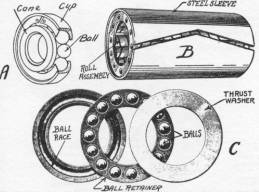

Wheel bearings seldom caused trouble.
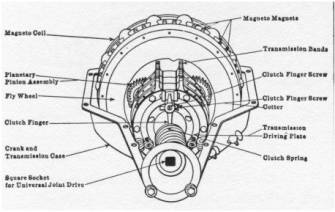
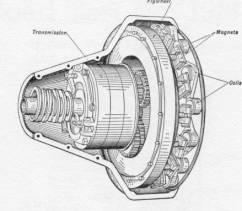
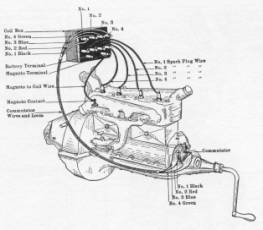
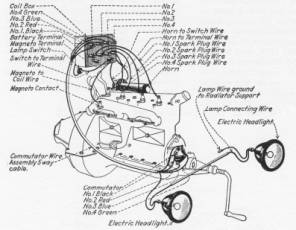
Early Model-T’s did not have a battery and used a Magneto, consisting of V magnets attached to a plate at the front of the transmission. When these moved past a top plug electricity was generated and delivered to ignition coils. The ends of the magnets served as oil dippers, lifting oil from the transmission case up to a funnel that fed a tube that carried oil to from of the engine. Piston rods connecting to the crank shaft had scoop dippers that picked up lubricating oil for the rods. On most old cars the oil system worked long after the magneto gave out. Later models depended on batteries for power to ignition coils – and powered new headlights that replace early model kerosene lamp “head lights”. Technology changed fast.
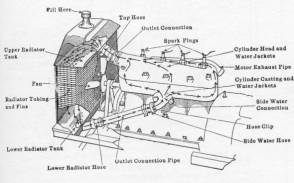
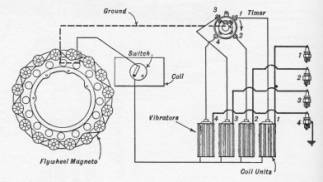
Model-T’s did not have a water pump, heated water went up and cooled down. The ignition switch connected magneto or battery to power ignition coils. Electrical flow was through a “timer” consisting of a rolled connected to the drive shaft that ground the selected ignition wire. Wooden boxes housed a core of soft iron wires wrapped in tin foil to form high voltage transformer, with high voltage delivered to the spark plugs. At the top of the coil box was a spring loaded electrical contact that broke primary current to the coil when pulled down and reconnected electrical contact when pull up by a spring. Coils were tuned to vibrate at a proper rate ensuring high voltage to a spark plug when connected by the timer. The timer grounding cup was link to the ignition lever on the left side of the steering column. Getting a tune up had real meaning. If the spark was not retarded when hand cranking the “kick back” could be sever.
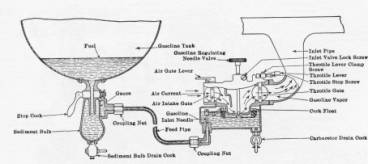
Owners connected
“bailing wire” to choke the carburetor from the front when cranking. A long rod on the right side connected to
the carburetor from inside – pull to choke and turn to adjust rich or lean.
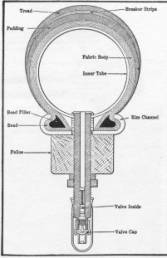
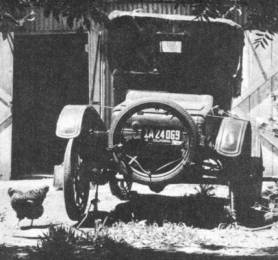
Tires were mounted on a rim,
and the assemble bolted on the wheel, spare above is rim with tire. Early models used 3.25 x 21 tires and later
models 4.50x21 with 6.25x21 truck
tires. Rear wheel was jacked up to
serve as flywheel to aid crank starting.
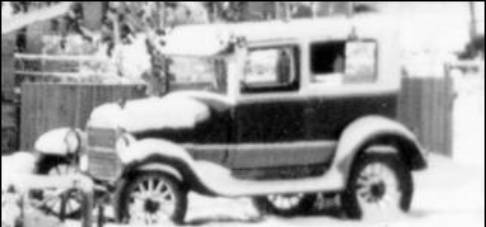
My 1927 Model-T
salvaged from Junk in 1938-39
Only Model-T in Decatur Co sporting a Radio
“She”
was painted Red(mid)-White(top)-Blue(bot).
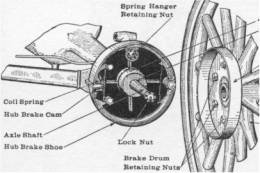
Cloth bands were replace with Model-A brake lining providing assured
“take off”. I installed a radio with
speaker in the ceiling. The “truck”
tires in back were a standard tire with bead removed inside a “blown-out” truck
tire. It readily carried heavy loads,
and the larger diameter gave extra “speed”.
Normally full speed was about 40 mph, while “she” could almost reach 50.
The starter worked but was often cranked as we couldn’t afford a battery that
would keep a charge overnight. The
first car cost $5.00 and the license tag cost $4.00. The above car cost $7.00 due to it’s good body though it was
missing engine parts.