H-Korea\MJ-KP28.DOC
Dangerous Skies
Above Korea
By Col James C.
Mitchell
USAF, Retired
ACKNOWLEDGEMENT
My
deep appreciation to my daughter Melissa, without whose help this article would
not be finished at the time of this reading. She spent many hours trying to
decipher my poor penmanship and correcting numerous misspellings. But her
continuous urging for me to get more pages to her is what kept me on track
instead of out flying somewhere.
On
the 25th of June 1950, North Korea invaded South Korea and started
the Korean War. Immediately the United States joined in to help South Korea. As
time went by several other United Nations countries also came to South Korea’s
aid as the North Koreans advanced to the south.
At the time I was stationed at
Kessler AFB, Mississippi. The following Saturday evening, my wife Gracie and I
were attending a farewell dinner party for General and Mrs. Powell. He was
being transferred to Headquarters, USAF. During the dinner the Base Executive
Officer tapped me on the shoulder and asked me to step out into the hall with
him.
In the hallway he asked, “Mitchell,
is your serial number 0-742510 ?”
“Yes sir.” I replied.
“I have a TWX here from
Headquarters, USAF, with your name, rank and serial number on it. It says you
are to be transferred immediately. I will give you until 9:00 to finish your
dinner. Then you are to go to your quarters to get your gear and make
preparations to leave. You are to report to Base Operations at midnight. I
don’t know where you are going, but we will have a B-25 ready to fly you out.”
“Yes sir, I understand.” I said.
“Is Captain James Williams in there
at the party as well?” he asked as I turned to leave.
“Yes” I replied, “he is.”
“Well, he’s going to. You go on back to your
dinner, and I’ll go let him know.
I made my way back to the table. As
I could not discuss my orders with the others at the table, I simply told
Gracie that we would have to leave early. We finished our dinner, excused
ourselves and went home. On the way home I let her know that I was being
transferred out. I was sure that I was going to Korea, so as I packed my gear,
we discussed plans for her and our three year old daughter Pat to move back to
Nebraska.
Upon arriving at Base Operations a
B-25 was parked with the engines idling. The Base Exec came up and handed a
packet of orders to me and wished me luck. I hugged and kissed Gracie, then
hugged little Pat. She immediately started crying and yelling.
“Don’t go Daddy! Don’t go Daddy!”
she cried and grabbed onto my legs. It was a hard thing to pick her up and hand
her to Gracie. I said, “I love you.” I then picked up my bags and walked around
the wing to the plane as Pat still cried out, “Don’t go Daddy! Don’t go!” Her
cries wrenched my heart.
About six hours later we arrived at
Fairfield-Suisun (Travis) AFB, California and checked into the passenger
terminal. We were told that we would be continuing on that morning and were to
report back at 0800 hours. Jim Williams and I returned at eight and were joined
by twelve other pilots and navigators that had also arrived the night before.
When we checked at the booking counter we discovered that the “Snafu” factor
had taken over. There was no plane for us. After waiting for four days we went
into the director’s office as a group. When the Director, a Lieutenant Colonel,
saw our orders he exploded.
“What in the hell are you guys still
doing here? You were supposed to have departed last Sunday morning. I’ll get
you out of here early tomorrow morning. Be here at 0700, we will have a plane
for you.”
The next morning we departed on a
chartered DC-6 airliner. They loaded our group, then filled it up with other
officers, airmen, and soldiers all headed for Korea. Our orders did not have a
destination on them, so we did not know where we were actually going. Since Jim
and I were both current in the B-25 and had previous combat experience in the
B-29 we had an idea that we would be going to a unit that had one of those
types of aircraft, although we had no clue as to which.
After a two-day delay in Hawaii, we
proceeded to Guam. Our group disembarked while the others remained onboard to
proceed to Japan. A bus pulled up and a captain stepped out and said, “Welcome
to the 19th Bombardment
Group. We’ve been waiting for you. It took you quite a while to get here. ”Little did he know.
We learned that all the bomb
squadrons and support squadrons had deployed to Okinawa, leaving only the Group
Headquarters on Guam. They had done it in a hurry. Seventeen hours after
receiving word of the North Korean invasion and orders to move to Okinawa and
start action, the bomb squadrons had moved and their B-29s had begun dropping
bombs on North Korean targets.
We had to wait again for a flight to
Okinawa. Finally on 21 July, we arrived at our destination. Jim and I were
assigned to the 28th Bomb Squadron and reported for duty to Major
Greensides, the Squadron Operations Officer.
After introductions and telling him
of our background, he said, “We need you desperately, so I’m going to put you
to work to get recurrent in the B-29 right away. Here’s a flight manual for
each of you. Get plenty of cockpit time in the aircraft parked on the
hardstands. Most of your check out will be during combat missions with an
instructor pilot. Your first flight will be in two days.”
So I began my third assignment to
theaters of conflict. I had been on Guam during WWII flying B-29s during the
air battle over Japan. My second tour had been to Germany to fly C-54s in
the Berlin Airlift. Now I was on Okinawa as a B-29 Aircraft Commander, to
participate in the Korean War by flying bombing missions over North Korea. Once
again I was doing my thing for Uncle Sam.
I was assigned to fly with Captain
Schniederhan during my upgrading. Jim and I spent many hours together studying
the flight manual and going through cockpit procedures in the aircraft. I did
find time to write to Gracie and Pat to let them know where I was and that I
was flying the B-29 again.
As
it turned out, Schniederhan and I flew a training flight, making take-offs and
landings, aerial maneuvers and other procedures for my first flight. This was
followed by another training flight two days later. His crew bombardier was ill
so we could not fly a combat mission. Then on 1 August, I made my first combat
mission flying in the pilot position. This was followed by three more combat
missions, two of which I flew in the aircraft commander position. We completed
another training flight which was my final check ride.
Major Greensides then established
Combat Crew No. 2 with me in command as the aircraft commander. It was a
partial crew because we did not have a navigator or bombardier. The officers
moved into a four bedroom family quarter Quonset hut. Each time we flew we used
substitutes from other crews to fill our vacant positions. We flew our first
combat mission on 15 August in our newly assigned B-29A, 44-62134, bombing a North Korean military
storage area.
About 1 September I had to fire the
crew pilot. He was worthless! He
couldn’t remember his procedures, wouldn’t follow instructions, and was afraid
of the airplane. It was the best move I ever made. Major Greensides gave me a
new man in the squadron. Tony O’Connor was a good pilot, fit right in with the
crew and did an excellent job. Shortly after that George Hobkirk joined the crew
as our navigator. Our crew was growing. Perhaps soon we would get a bombardier
and then be complete.
The
crew named our plane “Persuader” and had the appropriate nose art painted on
it. For aircraft identification the Group Shield was painted on the left side
of the nose and the Squadron Insignia, the head of an Indian warrior, was on
the left side of the vertical stabilizer.
During September we flew seven
combat missions and six training flights, navigation, practice bombing,
instrument procedures, etc. The war was winding down; the North Koreans had
been driven north to near the Chinese boarder at the Yalu River. By the end of
the month, the Group stood down from combat missions and went into a training
mode.
During the month of October, our
bombardier joined the crew. I cannot remember his name simply because after
forty-eight years it escapes me. I also have no record with his name on it.
Our crew was now complete. Combat
Crew #2, 28th Bombardment
Squadron, 19th Bombardment Group consisted of the following
personnel:
1st Lt. James C. Mitchell (Mitch) —
Aircraft Commander
1st Lt. Anthony C. O’Connor (Tony) —
Pilot
Capt. George D. Hobkirk Navigator
1st Lt. Alfonso C. Toler (Al) —
Radar Navigator
Missing Name — Bombardier
MSgt. Salvador J. Camillo (Tony) —
Flight Engineer
SSgt. Steve D. Michell — Radio
Operator
SSgt. Wendell Bourgenon (Bourgy) —
Central Fire Control Gunner
SSgt. Robert J. DeConsin (Deke) —
Tail Gunner
SSgt.
John R. Filon — Left Gunner
SSgt.
Mark Pray — Right Gunner
We flew four practice bombing
missions and one combat mission. The atmosphere around the squadron became very
relaxed. We all thought the war was going to end any day.
Then all hell broke loose! Thousands
upon thousands of Chinese troops stormed across the Yalu River into Korea. They
came in massive hordes and overwhelmed the South Korean and United Nations
forces. The UN forces started a general retreat and fighting a horrendous
battle just to keep from being overrun, surrounded or annihilated.
We immediately went back to work.
Our crew flew five missions the first fifteen days. We were bombing rail lines
and bridges, storage areas, and dropping fragmentation bombs with rattlesnake
proximity fuses on troop concentrations. On the 15th we received some minor damage and had an
engine problem, so we landed at Itizuki Air Base in Japan. They repaired the
engine in a short time, and we proceeded back to Kadena.
During this time we expected to be
attacked by Chinese MIGs. They were mixing it up with the F-84s, but even though
we would see some occasionally in the distance we were never attacked. By the
21st of the month, the
Persuader was ready to fly again and we flew five missions through 1 December.
The morning of 6 December we were
awakened at 0245 hours. We were later picked up by a 6X6 truck and delivered to
the mess hall at 0330. After breakfast we caught the truck again and arrived at
the briefing building. Our enlisted crewmembers met us there and we were all
seated prior to the briefing time of 0430 hours.
We received the general briefing.
The 30th and 93rd Squadrons had targets in other areas of
North Korea while the 28th
Squadron had two flights scheduled. Our crew was number 4 in the first
flight of 5 aircraft.
We were to bomb the railroad bridge
spanning the river at Sinanju, North Korea. This bridge was on the main supply
line between China and North Korea. The other flight was scheduled to bomb
another target in North Central Korea with 4 B-29’s.
Following the general briefing, the
crew members split up to attend their specialized briefings and then joined
together for mission planning, with the exception of the gunners who went to
the aircraft to check guns and ammunition. My briefing included the Aircraft
Commander’s Intelligence briefing. The Briefing Officer said, “Gentlemen, I
have some good news this morning. Last night a ship arrived at Pusan Harbor
loaded with F-86 Jet Fighters.” We all let out a yell, and he continued, “They
will not be unloaded until later today, so they will not be in the air to give
you protection. Having the F-86s here will make a big difference in the air war
over North Korea. The Russian built MIG 15s have been having things pretty much
their own way against the F-84s and other US planes for the past few months.
The arrival of the F-86s will definitely change that picture.”
He covered a few more items, then we
were dismissed to join the others in the mission planning room. The pilot and
flight engineer computed the aircraft performance data and made out the planned
fuel log. The Navigator and radar navigator drew up their route charts and made
out the flight plan, and they went over it with me. The Bombardier and radar
navigator completed their target study and computed the bombing data. I gave
the radio operator the classified call signs, and we went over the intelligence
information for messages and reports. When this was all completed we picked up
our individual emergency gear and proceeded to our plane.
The emergency equipment consisted of
a parachute, oxygen mask, helmet, life vest, dingy life raft, survival vest and
a 45 caliber pistol. Also one “Mae West” emergency radio was issued to each
crew.
We arrived at the “Persuader” and
lined up the parachutes and life preservers in front of the left engines,
stowed the rest of our equipment in our individual stations, and then
accomplished out preflight inspections. When the pre-flight was completed we
lounged around under the plane until the appropriate time to hold crew
inspection.
On the order, “Fall in for Crew
Inspection”, each crew member lined up standing behind his parachute in front
of the left engines. Each member in
turn gave me his report on mission preparation and preflight. I then briefed them on the key points of the
mission, crew coordination procedures, and there information of importance,
including the intelligence information. This particular morning, I briefed them
on the activities of the enemy MIG Fighters during the past three days and the
areas along our route where we might encounter them. This was the area from our
initial point to target and along our withdrawal to the coast of Korea Bay. I
emphasized the fact that we would not have any fighter escort during this
mission. I also told them about the shipload of F-86s docking at the port city
of Pusan. We then put on our survival vests, life vests, and parachutes and
climbed aboard the bomber.
Aboard the aircraft, Tony and I
completed the “Before Start Engine Checklist”. I then gave Camillo the order to
start engines. The crew completed all of their appropriate operational checks
while Tony, Camillo and I did our necessary checks and ran up the engines. We
were now ready to taxi.
Another flight formation had already
taxied to take off ahead of us. Our flight of five bombers then taxied out in
order. We were number four in the flight. Our leader started his takeoff at
0715 hours local time. The four others followed at one-minute intervals.
As George counted down the seconds
to release the brakes, I brought the throttles forward to full power and watched
the manifold pressure stabilize at 56 inches of mercury. On George’s hack the
brakes were released and we started rolling down the runway exactly one minute
behind the number three bomber ahead. The plane was heavy, loaded to maximum
weight with 20,000 pounds of bombs, 6500 gallons of fuel, plus the ammunition
and protective steel flak suits and curtains. Under those conditions, the
initial acceleration always seemed slow. Tony called out “Air speed 45’ and
Camillo called “Engines all check okay, sir.” As we accelerated, Tony called
off the airspeed at each ten-mile increment. When the speed reached 145 mph I
pulled a little back pressure on the control column. The nose raised slightly,
and the plane gently lifted off the runway. We immediately raised the landing
gear, then slowly raised the flaps as we accelerated to a climbing speed of 195
mph. Tony and I reduced the power on the engines to climb power setting and the
cylinder head temperatures began to cool down to normal. I then made a turn to
the right and took up a northerly heading. We were on our way to Korea. This
would be my 25th Combat
mission over Korea.
As we climbed, the crew settled into
a relaxed mode. It would be more than four hours until we reached enemy
territory. We leveled off at four thousand feet, our cruising altitude, and
adjusted ‘the power to maintain long-range cruise speed.
After I had flown the plane for
awhile, I engaged the autopilot. The interphone was relatively quiet with an
occasional routine operational check mixed in with idle chatter. After an hour
or so I turned the plane over to Tony while I pushed my seat back and had a cup
of coffee and a sandwich from my flight lunch. The bombardier and right gunner
had gone into the two bomb bays and removed the safety pins from each bomb. The
bombs now could be electronically armed for release. The gunners had test fired
their guns, and they were all set for action.
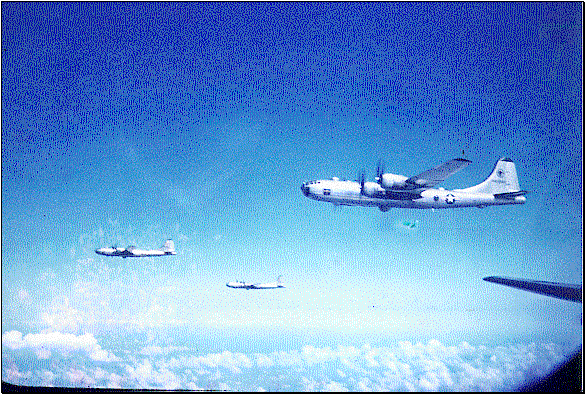
Seventy miles south of the Korean
Peninsula is a volcanic crater named Chej u-Do. As we passed over the crater, I
disengaged the autopilot and we set climb power and began our climb to 25,000
feet. During the climb, Camillo reduced the temperature inside the cabin and I
instructed the crew to put on their arctic flying gear and emergency equipment.
By the time we leveled off at 25,000 feet all crewmembers were prepared to
enter the combat zone.
The city of Suwon was the rendezvous
point for the flight to join up in formation. Captain Schniederhan, with the
Squadron Commander Lt. Colonel Tower riding along, was the flight leader. As we
approached Suwon, the other B-29’s came into view. We identified the leader
making a slow orbit turn to the left with his nose gear extended. A few minutes
later the five-ship formation was formed and the leader ‘took up a northerly heading
on course. Captain Williams was flying off the leader’s right wing in number 2
position and Lt. Austin was off the left wing in number 3 position. My number 4
position was directly behind and slightly below the leader. The number 5 crew,
commanded by Lt. Moon, was flying off my left wing and slightly low. The join
up maneuvers and all other activities on the mission were accomplished under
radio silence.
We passed over the frontlines of the
battle entering enemy airspace about 20 minutes later. Although we had
encountered quite a bit of anti-aircraft fire on several missions, we had been
lucky though and had not received any major damage to our plane. I instructed
the bombardier and gunners to be alert and to keep watchful eyes for enemy
fighters from here on into the initial point and target. We had not been
attacked by the MIG 15s from China since the Chinese Army had entered the war
the previous October and had driven our army south toward Seoul. Mostly, they
had been engaging the allied fighters and ignoring the B-29s operating over
North Korea. We had seen them occasionally but they just kept their distance.
We knew however, it was only a matter of time until they would attack.
We made our way without incident to
the initial point, the town of Yankdok, which was approximately 65 miles
northeast of the capital city of Pyongyang. As we approached the I.P. we made a
turn to the left and flew over the I.P. on course to the target. Once again I
cautioned the gunners to be alert for enemy action.
The target lay 70 miles ahead. Our
aiming point was the railroad bridge at the northwest end of the Sinanju
marshalling yards, which joined the two railroads coming from Mukden and Human,
China. These were the two major lines carrying war material from China into
North Korea. One railroad then ran south from the yards to Pyongyang and the
other east to Wonsan. We were tucked into a good tight formation. The sky was a
clear bright blue, and the outside temperature read minus 50 degrees.
As
we approached the target area, Al called out, “I have the target 40 miles ahead
on my radar scope.” The bombardier acknowledged the call and started his
bombing checklist. At approximately 20 miles he advised Al that he could see
the target visually and told me the bombing checklist was complete. He clutched
in his bombsight and started synchronizing the bombsight with our rate of
closure to the target. When the bombsight indicies met the bombs would drop
electronically. I maintained our position directly behind the leader. He would
be the one killing the wind drift for us, so I could continue flying formation
with him and not engage the autopilot.
Al had been calling off the range in
five-mile increments. Just moments before he called fifteen miles to go,
Bourgy, the central fire control gunner, called out, “AC, those F-86s you were
talking about this morning, are they supposed to be up here? Oh hell, those are
MIGs! And they are starting to attack!”
Moments later our tailguns and the
two upper turrets started firing. Bourgy called out, “A MIG coming in at four
o’clock high.” Deke said, “The second one is also coming in.”
I could feel the upper turrets
firing measured bursts. Mark shouted, “We’ve been hit! Number three is smoking!
Number three is on fire!” As I acknowledged, Camillo started his engine fire
shutdown procedure. Mark repeated his call. Camillo replied, “I’ll take care of
number three, you shut up and get back on those guns!”
While
the bombardier continued his bomb run, Camillo extinguished the fire and shut
down number three engine. I pushed the prop-feathering button, but it did not
work, and the prop continued windmilling. I called for full power, and Tony set
it on the three remaining engines. Using this much power I was able to maintain
our position in the formation. Once again I pushed the button, and still the
prop did not feather.
In the meantime, the gunners were
calling positions on the MIGs. I saw the bombs start dropping from the leader
and immediately our bomb bay doors opened and the bombs started dropping as the
bombardier called, “ Bombs away!” The intervelometer was set for 15 feet
separation of the bombs on impact, so the load went out of the bomb bay fast.
The bomb bay doors then closed automatically.
The formation made a turn to the
left, and the MIGs had disappeared. We rolled out of the turn on a heading
which would take us to the coast of Korea Bay. I pulled the power back and
asked’ Tony to set the engines on climb power. When we did this, our speed
dropped rapidly due to the drag of the windmilling prop. The loss of speed
caused us to fall behind the formation, and we watched them as they gradually
pulled away and disappeared in the distance. Our speed stabilized at 15 mph
above stall warning, and we were loosing altitude at approximately 300 feet per
minute. We could not maintain level flight without stalling with this power
setting. I elected to maintain the power setting and sacrifice the altitude.
I
requested a report and damage assessment from each crewmember. Deke reported
that an explosive shell had hit the bulletproof glass of his right window. He
added that his ears were ringing so badly from the concussion that he could
hardly hear anything on the interphone. Also, a glass fragment had cut his left
forefinger. The MIGs had stayed out of his cone of fire during their attacks,
so he had no hits on them.
Philon reported that his station and
left wing of the aircraft was okay. Further, he had observed that the number
five bomber had part of its right wing flap shot away. He had fired at two MIGs
attacking number five, but did not observe any visible damage to them. Bourgy
reported that his station was okay but that the upper forward turret had ceased
firing. He said he was sure he had hit the lead MIG attacking us, as he had
seen pieces of metal fly off it. It was the same MIG that damaged our number
three engine and dove away. Steve reported that his station was okay although
we had received a hit in the tunnel leading to the aft compartment.
Bourgy interrupted and said, “That
was probably why the forward turret quit firing.” After receiving reports from
the rest of the crew that the other stations were okay, Camillo reported all
systems okay, except number three engine, and gave me the amount of fuel
remaining.
I instructed Steve to dispatch the
following strike report:
“Bombing results good. Attacked by 4
MIGs. Number three engine inoperative with windmilling prop. Unable to hold
altitude. Proceeding to Korea Bay and on to South Korea if possible. Since we
cannot hold altitude, will ditch by American warship if necessary, otherwise,
will land in South Korea.”
“We will hold the southwest heading
until approximately thirty-five miles off coast,” I briefed the crew. “ We will
then proceed south down the Korea Bay toward the Yellow Sea. After an hour,
flying under these conditions, we will be down to seven thousand feet altitude
and near ChoDo Island. From there we will proceed to South Korea and land.” I
then instructed George to change his flight plan accordingly. Al took a fix
with his radar and gave him the coordinates where we would coast out in
approximately ten minutes. From that George plotted a turn point over the bay
and gave me the estimated time in route.
Continuing to fill the crew in, I
said, “We are doing fine right now, but that windmilling prop could run away
and spin off the engine any moment. If that happens, it could take the engine
with it, ‘or fly into the fuselage causing severe damage, or fly into number
four engine.” I added, “If we’re lucky it could fly free and clear, but in case
that doesn’t happen, I want each of you to keep your parachutes and survival
gear on. Also, we may have to bail out so each of you keep your one man dinghy
with you at all times so it can be snapped to your parachute at a moment’s
notice.”
“In the meantime,” I instructed the
bombardier and two gunners manning the waist blisters, “keep a look out for any
American ships so the navigator can plot their location on his chart.” In case of an emergency we could head for
the nearest ship to ditch the aircraft along the side of it.
When we had completed this business,
we had over flown the coast and were out over the Korea Bay, approaching the
turn point. The adrenaline had ceased flowing and the crewmembers settled into
a more relaxed routine for the long trip south. There was a fair amount of
interphone chatter. Some of them were retelling their actions and observations
during the attack. Some of them were teasing Deke for being the only crewmember
that was going to get the Purple Heart, for only a cut finger.
“The second MIG came back around for
a second attack.” Deke said, disgusted, “He was a coward. He wouldn’t get close
to my cone of fire. He came in from five o’clock and broke off his attack when
Bourgy started firing. I think maybe he’s the one that put the shell in the
tunnel.”
Bourgy replied, “I had both top
turrets firing into the leader as he came in. I’m sure I saw pieces flying off
his plane about the same time he hit number three engine. Then he dove under
the wing.” He continued, “Number two B-29 didn’t fire any guns at all. Their
guns must have been frozen up from some oil residue left on the firing
mechanism.”
“I saw that bird come in,” Camillo
piped in, “But, I wish I hadn’t. When Bourgy called that fighters were coming
in, I thought this is a good time to get some pictures. I grabbed my movie
camera and pointed it out my window. As I looked through the eyepiece I was
looking right at the nose of that MIG and his guns were firing straight at me!
That was enough! I dropped my camera. It was rolling around on the floor while
I took my calculator and started working on my fuel figures. I’ll never raise
up and look out that window again!”
Al said he had been able to get some
excellent radar photos of the target area, the bridges, marshalling yards and
some of the other facilities. The bombardier told him he didn’t think he’d need
the pictures of the bridges because our bomb blasts had completely covered the
rail bridges from the south abutment to three-fourths of the distance across the
river. He said, “I’ll bet the reconnaissance photos will show the abutments
completely destroyed and several spans knocked down into the river.”
“This is the first time we’ve been
jumped by Chinese MIGs.” I said. “They will be back from now on. You can count
on it. And for you guys that did not fly in WWII”, I continued,
“congratulations. ‘You now have had your baptism under fire.”
We were all glad that we didn’t
receive damage more severe, particularly Steve and Bourgy. They had a B-17 shot
out from under them over Germany during WWII and had been imprisoned together
in a POW camp until the end of the war. They did not want to go through that
experience again.
As we came over Cho-Do Island,
George and I agreed that we probably would not be able to stay out over the
Yellow Sea and still make it into South Korea. Therefore, I decided to cut
across the western peninsula of North Korea on a south easterly heading direct
to South Korea. I was hoping we would make it over the front lines of the
battle before I had to decide whether to bail the crew out or make a forced
landing.
In addition to altitude, fuel
reserve was becoming a consideration. Having the engines running at rated climb
power all the time from the target had used a large quantity of fuel. We had
decided to use 2,500 feet as our minimum altitude over enemy territory. The
front lines ran from just a short distance north of Seoul westerly to the coast
just north of Inchon. Our calculations indicated we would reach 2,500 feet at
our current rate of descent, approximately 75 miles short of the front lines.
As we descended across the North
Korean peninsula there were no sightings of ground fire. This made me feel
better. I again advised the crew to keep a sharp look out for it. There were
still no signs of ground fire as we approached 2,500 feet altitude, so I
decided to maintain the same power, air speed and rate of decent.
None of our charts indicated any
airfields close to the front lines other than Kimpo Airfield. It is located
twelve miles west of Seoul and was about five miles south of the front lines.
Tony, George and I decided that would be the best choice. We knew Kimpo had a
runway that was long enough for a B-29, and it was probably as close to our
location as any other airfield. So, I adjusted our heading toward Kimpo.
Upon
reaching 2,000 feet altitude, I increased the power on the engines and leveled
off for a few minutes. The R-3350 engines have a time limit of ten minutes to
use power above rated power. 2400 RPM. I did this three or four times until we
passed over the Korean lines. We picked up some minor small arms fire. I
expected medium gunfire, but evidently our luck was holding, and we passed over
the area without receiving any. The whole crew heaved a sigh of relief and gave
out a big yell as we passed over the American lines.
A couple of minutes later we could
see the runway at Kimpo Airfield. I gave the order, “Prepare for landing.”
Camillo computed the gross weight of
the aircraft and passed it to Tony. He then completed his before landing
checklist. Tony took the gross weight figures and computed our approach speed
and landing speed. We were then able to start working the pilots before landing
checklist. I advised Tony that we would complete the entire checklist’ except
for the flaps and landing gear. I would call for them later in the approach
because the airplane would not fly the glide slope of the approach with the
windmilling prop and the flaps and gear down.
Tony set the props and turbos at
full power while I adjusted the throttle to hold the approach speed with a good
glide angle. At approximately 300 feet above the ground, I called for half
flaps, then for the landing gear. I adjusted the power and brought the plane
down. It touched down on the wheels about 150 feet down the runway.
Surprisingly, it was a much smoother landing then I had expected, and we were
happy to be back on the ground.
A jeep came out to the runway and
led us to a parking spot next to some marine fighters. Camillo shut the engines
off and the other crewmembers scrambled out of the aircraft while he and I
signed off our aircraft forms. Out of the nose gear hatch, we went down the
ladder and were met by a surprise. The temperature was 30 degrees below zero!
However, we were safely on the ground, and that was the important thing.
A staff car had driven up just as we
exited the plane. As a Colonel got out, I saluted him.
“Are you the pilot?” He asked.
“Yes sir”, I replied, “Lieutenant
Mitchell.”
“Well why in the hell did you land
this big airplane on my field?” he demanded, “Didn’t you know that we are
evacuating and that the field is closed? We may be overrun by the Chinese Army
at anytime.”
I explained to him that we had
battle damage, and since we could not hold altitude we had declared an
emergency and had been cleared to land by the control tower. He then wanted to
know if the airplane was flyable. I advised him that after we had an
opportunity to inspect the damage, we could then give him the information as to
whether the plane could be flown or not.
“If you can’t get it fixed in 48
hours, I will have to burn it.” He told me. Needless to say, I was not happy.
I
stalked over to the damaged engine where Tony. Camillo and Deke were checking
it over visually from the ground.
“This guy wants us to fly the plane
out of here or he is going to burn it.”
“Like hell he is!” Camillo exclaimed
as Tony and Deke grumbled out a few choice obscenities.
It was obvious to my men that I was
furious as I started handing out instructions. “ Go with the follow-me jeep and
get a couple of maintenance stands from Transient Maintenance. Take the engine
cowling off and inspect both the engine and the accessory section and give me a
report. Then we will decide what we have to do. But, one thing is for sure. He
is not going to burn this plane! We’ll get it out of here one way or another.”
I continued, “I will be at Base Operations to close out our flight and arrange
for a meal and a place for us to sleep. It will be dark soon so we want to get
as much done as we can before then.”
I walked back to rejoin the Colonel,
and we headed for Base Operations. When the colonel dropped me off, I closed
the flight plan then talked to a captain who was the Base Operations Officer.
He called and made the arrangements for us to eat at the mess hall and acquired
tent assignments for the crew to use for the night.
A few minutes later, the crew
arrived with the news. The engine was not damaged, which was good. However, the
oil tank was ruptured and the oil lines to the prop feathering system were
severed, which was not good. Also, the cannon shell had penetrated the number
four fuel tank.
We discussed the situation and
developed a plan to pump the remaining fuel out of number four tank into the
other tanks and then refuel with only enough fuel to fly to Itizuki Airfield at
Fukuoka, Japan. We would hand feather number three prop on the ground and
unload all the remaining ammunition, flak suits and flak curtains. With the
aircraft at minimum weight, we would make a three engine take-off and fly to
Japan on three engines.
It would be easy. Both Tony and I
were checked out in three engine take-offs, and we practiced them routinely at
our home base just to be prepared for a contingency such as this. Feeling
pleased, I called the colonel.
He blew his top! When I mentioned
three engines, he said, “No Lieutenant. No. No pilot will make a three-engine
take ‘off in a four-engine airplane on any airfield of mine. Is that clear
lieutenant?”
“Yes sir.” I replied and hung up.
I turned to the crew. “Okay, that
cancels that. The bastard says he will not allow a three-engine take off. Let’s
get something to eat, then we can discuss our options.
As we were leaving the operations
office, the Ops officer called and waved for me to come to his counter. I
approached the counter and asked him what was up.
He
told me there were three war correspondents on the field and that they wanted
to interview me. They had heard of our problems and the attack by the MIGs.
When I consented, he led me into a room behind the counter where the three were
waiting. They introduced themselves. One was with the Stars and Stripes, an
overseas bi-weekly newspaper. The others were with the Associated Press and the
Los Angeles Times. They asked if I was surprised by the MIG attack since they
had not attacked the B-29s before. I told them we had been expecting it to
happen at any time, and that from now on we could expect it to happen daily.
When they asked if I would tell them
the details of the attack, I gave them the details and said, “I think we may
have knocked one of them down. We saw pieces fly off the aircraft, and he dove
away. We didn’t see him pull out of the dive, nor did we see him impact with
the ground, so for now it’s only a guess.
After I told them what damage we had
received and why we had landed at Kimpo, they took some pictures of me
demonstrating with my hands how the fighters had attacked. That ended the
interview, and I headed for the mess tent.
When
I arrived at the table with my food tray, the crew was full of questions.
“Okay,” I said, “I’m hungry, so just let me eat. While I’m eating I will tell
you about the interview I had with the war correspondents.”
In
between bites, I told them the names of the agencies they represented and
filled them in on the details of the interview. By the time I had finished
eating, we were ready to discuss our immediate problem.
“Well boss,” Camillo responded to my
inquiry about the number three engine, “ there is no damage to the engine
itself. Also, the prop and the prop head are not damaged. All the damage to the
nacelle is in the accessory section. The shell entered the nacelle and
penetrated the oil tank, splitting it open except for the bottom part. That’s
why we could not feather the prop, no oil could reach the cylinder in the prop
head. The shell passed through the accessory section without exploding until it
hit the collector ring. When it did explode, the explosion blew away the
outboard cowl flaps and the outboard section of the aft exhaust collector ring.
There was no damage from the oil fire. There is some smoke residue left and a
few places where the aluminum is scorched, but not seriously.
I asked, “ From what you have told
us, I take it we can start the engine and run it?”
“That’s correct.” He replied, “The
inboard cowl flaps will work okay to control the cylinder head temperatures,
and we would have to wire down a couple of loose cowl flaps still remaining on
the outboard side.”
“How much oil will the bottom of the
oil tank hold below the ruptured seam?”
“About eleven gallons.”
I
looked over at Tony. “ If we can get some hydraulic line from Transient
Maintenance, we can replace that severed oil line to the feathering pump. Then
with that much oil in the tank, we would be able to feather the prop.
Tony shook his head. “We have
already checked on that, and there is none available. However, one of the guys
who shall remain nameless suggested we take the brake lines off of one of those
Marine fighters sitting out there in unflyable condition. Then we would have a
workable feathering system.”
Choosing not to comment on that
action, I said, “Well lets check out our sleeping bags and get tents assigned
to sleep in tonight. Then we will see what we can work out in the morning to
get the plane into the air and fly it to Itizuki.”
The officers were assigned to two
tents in the officers’ area, and the sergeants were assigned to the NCO area.
They issued each of us a heavy parka, arctic gloves, sleeping bag, pillow, and
some blankets, plus soap and a towel.
Tony and I chose one tent and the
other three officers took another one a few tents down. It was freezing cold! I
have no idea what the temperature was by that time of night, but it was a far
cry from what we were used to in Okinawa. I laid the sleeping bag on a cot with
a mattress, put the two blankets and parka over it and tucked them in on each
side. Slipping out of my flying jacket and boots, I crawled into the bag. In a
few moments I was warm and sound asleep.
“What the hell is that?” I sat
straight up in the sleeping bag. A big loud klaxon horn was going off right
outside out tent. We slipped into our flying boots and parkas and ran out into
the street. A guard with a rifle was standing a few hundred feet up the street.
“What’s wrong? What’s going on?” We
shouted.
“The base has been invade by
infiltrators! Get into a bunker, there’s one up the street about 300 yards.
Hurry!” He yelled.
We ran to the bunker. Tony and I
were the only ones in it. While people ran around outside yelling and making
all kinds of noise, Tony and I spent a cold, miserable hour and a half
listening to the commotion going on around us. Occasionally we would hear some
gunfire.
“I’ll bet they are just shooting at
shadows.” I said. Tony nodded, and each time we would hear a shot we would
chuckle. Finally, the all clear was sounded and we made our way back to our
sleeping bags.
“Hey Lieutenant?” I heard a voice in
my sleep. “Hey, Lieutenant?” it repeated. I opened my eyes and raised up on an
elbow. A sergeant was standing there and said, “You’ll have to get up
Lieutenant. Get your crew together, have some breakfast, and be at Base
Operations at 0745 hours. FEAF (Far Eastern Air Force) Headquarters has sent a
plane from Japan to pick your crew up and take you to Tokyo. Another man is
getting your NCOs up. They will meet you at the mess hall.” He turned and left.
After Tony and I
turned our bedding and parkas over to the supply office, we met the crew. They
were all wondering what this was about but I had no answers for them.
“Perhaps the Operations Office will
have some information for us. I said. However, when we arrived at Ops, the only
thing they knew was that the plane was inbound and it was to pick us up and
take us to FEAF Headquarters.
A few minutes later a B-17 entered
the flight traffic pattern. This was a surprise as we were expecting a
transport aircraft. The crewmembers began mumbling. “Boy,” one of them said,
“if we have to ride in that cold, drafty thing, this is going to be a miserable
trip.”
“Naw,” one of them responded, “That
can’t be for us.”
The B-17 taxied in front of
Operations and came to a stop. They shut down the two engines on the right wing
and kept the other two running. The rear entrance door on the right side of the
fuselage opened and out stepped a staff sergeant dressed in a class-A uniform.
“Is this the B-29 Combat Crew?” He
asked. When I acknowledge that we were indeed the crew, he said, “Sir, this is
General MacArthur’s personal airplane, and we are here to pick you up. So, if
you will get aboard, we will be departing immediately.”
As we started up the steps, the
pilot was already cranking the two right engines up. Every one of my
crewmembers’ eyes flew open, including my own. We were amazed. None of us had
ever seen a B-17 like this before. The interior was completely paneled with
Philippine mahogany. There was a conference table also made of mahogany with
conference chairs of black leather. Also there were two over stuffed chairs and
four airline type seats made of the same leather. The floor was covered with
plush carpets and the few windows had short draperies. Forward was a galley and
restroom. Beyond that was the crew cabin.
The sergeant that met us was the
steward. After we had taken our seats and the plane had become airborne, he
removed his class-A jacket and donned his steward’s jacket. We were served
juice and coffee, and later, he gave us snacks and made sandwiches. We were
traveling to Tokyo as first class passengers!
After a flight of three and a half
to four hours, we landed at Tachikawa AFB. It was approximately 25 miles west
of downtown Tokyo.
In addition to being a large
aircraft repair depot, it was the home of FEAF Headquarters.
We thanked the crew for giving us
such a pleasant flight, and were whisked to Headquarters in three staff cars.
We were escorted into the Intelligence Section where we were met by an
intelligence debriefing team. The team leader was a Lt. Colonel who split us up
into different groups for the debriefing. The debriefing was extremely thorough
and took about an hour and a half to complete. We were then escorted to the
Passenger Booking Section where we were scheduled for a flight to Naha Air
Base, Okinawa. This was our crew’s first trip to Japan and we had been
wondering if we would have an opportunity to see any of Tokyo.
Since there was a two-day wait for
our flight back to Okinawa, the opportunity was there. While the enlisted men
were quartered on the base, the officers and I were given quarters in a rustic
inn located in the hills just outside the edge of the city.
This was our introduction to
Japanese style of living. No shoes were allowed inside the building. They were
removed and stored in a small alcove at the entrance. We were given thongs made
of rice straw to wear inside. All of the floors were of highly polished wood, and
there were no carpets.
The corner room I was given had two
outside walls with large windows with adjustable louvered panels protecting
them. The inside walls and sliding door were made of rice paper. The double bed
mattress lay on the floor covered with two sheets and two quilts embroidered
with flowers and Japanese designs. In the center of the room was a three-foot
square mahogany table, which was only twelve inches high with two large sitting
pillows on the floor by it. A pot of tea and plate of rice crackers were
brought in and set on the table. Positioned against one wall with a kimono
hanging on it was a wooden clothes rack which completed the furnishings.
The view down the sloping hillside
and overlooking the city spread out to the east as far as you could see. It was
beautiful. I found the bathing facilities at the rear of the building in a
large room with a huge hot water pool in the center for common bathing. Two
lavatory rooms were adjacent. Since the only clothes we had were our flight
suits and jackets, after we cleaned up, the five of us crowded into a taxi and
returned to the officer’s club to spend the evening and have dinner.
The next day we took the commuter
train into Tokyo and went sight seeing. The only building in the downtown district
to survive the burning of the city during World War II was the Imperial Hotel
built by Frank Lloyd Wright. After we had visited that, we walked the Ginza and
around the Imperial Palace grounds. Sightseeing was hunger building, so we had
our first sampling of authentic Japanese food when we stopped in a place for
lunch.
The second morning we boarded a C-54
transport plane and flew to Itizuki Air Base, then on to Okinawa, landing at
Naha Air Base that afternoon. I called our squadron at Kadena, and they sent a
GI truck to pick us up.
Finally at our home base, we gave
the information that the debriefing team needed about our mission although by
that time it was old news. Afterward I met with our Squadron Commander and
Operations Officer. They were interested in my version of the attack, although
the commander had been in the formation at the time. I also told them of the
reception we received from the Kimpo Base Commander. Upon expressing my concern
of the status of our B-29 we had to leave at Kimpo, they informed me that they
were also concerned and wanted to get it back if at all possible. The Squadron
needed it because six other squadron planes were out of commission and could
not fly for several days due to flack damage. They also told me that Lt. Moon’s
crew had reported that we had indeed shot down the MIG that had led the attack.
That concluded our meeting. With it over we were back at our home base, mission
complete.
The next day we flew another combat
mission using another crew’s airplane. The mission went well. After we
completed the debriefing, Major Greensides, our Squadron Operations Officer
called me aside.
“Mitch,
take my jeep and go up to 20th Air Force Headquarters.” He said,
“General Briggs wants to talk with you.”
I reported to Lieutenant General
Briggs, Commander, 20th Air Force. He put me at ease and asked me to
tell him about our mission on December 6 . I gave him the full story about what
had happened and the details of what had taken place at Kimpo Air Field.
I explained, “There is no reason for
that Colonel to keep the airplane up there or burn it. It’s a good airplane and
it is flyable. We could fly it out of there to Itizuki on three engines.”
“Can you take it off on three
engines?” He asked.
“Yes
sir,” I replied. “All of our AC’s are checked out on three-engine take-offs. We
practice them every so often and are required to accomplish one on each of our
check rides.”
“Okay,” he told me, “ don’t worry
about them burning your aircraft. I’ll put a stop to that. Also the evacuation
of Kimpo has been halted. It looks as though our troops have finally stopped
the Chinese advance. I think I will send you back up there. Get your crew
together and pick up any tools and aircraft parts you think you will need. We
will airlift you out of here first thing tomorrow morning. Tell Major
Greensides, I said to set it up.”
“Thank you sir. We will be ready.”
He then said, “You’ve done a fine
job Mitch. I am going to put you in for the Distinguished Flying Cross.
I stood up and again said, “Thank
you sir.
After I saluted him and departed, I
was one happy guy driving back down the hill to the squadron area. It wasn’t
often that I had the opportunity for a general to tell me that I had done a
good job.
The next morning at 0700 hours, we
boarded one of the 20th Air Force’s C-47s and departed for Kimpo by
way of Itizuki.
Back at Kimpo we started immediately
getting the Persuader ready to fly. While Camillo and Deke began taking the
entire cowling off the nacelle, the rest of us began unloading the ammunition,
flak curtains, flak suits, and any other unnecessary items to lighten the
weight of the plane. When they had the top cowling removed they discovered
another problem. A second shell had come in over the wing and penetrated into
the nacelle cavity breaking the top outboard engine mounting bolt.
This situation meant we would have
to change our plans for taking off. We had planned to install a new oil line to
the prop feathering motor and then fill the bottom of the tank with all the oil
it would hold, approximately eleven gallons. We would then start the engine and
use it for taking off. Once climb speed was reached we would shut it down,
feather the prop, and fly on to Itizuki on three engines. Now with the broken
mounting bolt we would not be able to put any power on the engine.
While Deke transferred the remaining
fuel out of the number four tank and the others continued their work, Camillo,
Tony and I discussed the problem. Since we knew the Base Commander still would
not allow us to take off on three engines, we decided on an alternate plan’ and
went back to work.
After they installed the oil line to
the prop feathering motor, filled the oil tank to the maximum it would hold,
they checked the prop feathering system for proper operation. It worked perfectly.
They then wired the outboard cowl flaps in the trailing position and replaced
the nacelle panels. By that time the fuel truck had arrived and we had him pump
in the small amount of fuel we required for the short flight to Itizuki. The
crew completed the preflight inspection while I went to the Base Operations and
filed our flight plan. The Operations Officer asked if we had the engine fixed.
I told him that it was all set and we would be cranking up very shortly. He
wished us good luck on our flight back. After I had thanked him, I hiked back
to the airplane.
I briefed the crew on our normal
procedures then covered the procedures we would use for taking off. Aboard the
aircraft we went through the check lists and Camillo started the engines. After
they had warmed up, he checked the temperatures and pressures, then increased
the RPM on 1,2 and 4 to 1500 and checked the magnetos. I then checked the
operation of the props and maximum power of each and had Tony set the manifold
pressure to 56.5 inches with the
turbo boost. Tony called the tower and received our flight clearance as I
started taxing to the end of the runway. As we approached the runway I saw the
Colonel’s car pull up and stop on the taxi strip near Operations. We know he
was checking to insure we had all four engines running.
When we received our clearance to
take off, we taxied onto the runway and lined up with the centerline. While
holding the brakes, I brought the two outboard engines up to full power then
started the takeoff roll. As the “Persuader” moved forward, Camillo shut down
number three engine and Tony feathered the prop. At the same time I gradually
increased the power on number two engine and fed in left rudder to control the
asymmetrical thrust and keep the plane going down the centerline of the runway.
With the weight of the plane being light it accelerated very well with only
three engines. In a short distance we reached flying speed and it lifted into
the air.
“1 wonder what that colonel is
thinking now?” Tony said as we climbed out.
We turned on course and climbed to a
flight altitude of five thousand feet. One hour and forty minutes later we
landed at Itizuki Air Field and checked the “Persuader” into the repair
facility.
Tony, Camillo and Deke stayed to
help with the plane while the rest of us made our way to Operations to close
the flight plan and arrange for some quarters. About five o’clock that evening
they came to the Transient Officers Quarters with information about the plane.
The engine mount could be repaired; the oil tank and cowl flaps would be
replaced, and all other damage to the nacelle would be repaired as well. This
work would be completed in two days. However, there was a major problem. The
right wing would have to be removed and replaced with a new wing.
They had removed an inspection panel
to number four fuel tank to inspect the inside of the tank where the cannon
shell had gone through. They discovered the shell had also passed through the
front wing spar. The fact that the shell did not explode when it hit the spar
was unbelievable. The damage to the spar had made it unsafe, and it could have
failed causing the wing to collapse at any time during flight. They wanted me
to meet with the chief of the repair section early the next morning. Camillo and
Deke then departed for the NCO quarters, and Tony and I headed to the Officers
Club for dinner.
The next morning I arrived at the
Maintenance Office at 0700 hours. I wasn’t sure anyone would be there yet. I
have always been an early riser, and when someone says early tomorrow morning,
I think of five or six o’clock, but I knew it wouldn’t do me any good to get
there before seven.
The door was unlocked, and when I
went in to my surprise there stood a big 6 foot 6 inch Texan looking at the
status board on the wall. I would have known him anywhere. It was Leon Hardin,
my roommate while we were flying the Berlin Airlift.
“Well, I’ll be damned!” I exclaimed,
“I never expected to run into you here on this side of the world.”
Leon turned toward the sound of my voice.
“Mitch! Boy, am I surprised. How the hell are you anyway?”
We talked for a few minutes,
bringing each other up to date on our activities since we had departed
Frankfurt, Germany. It was good to see him. With coffee in hand, we sat down
and our discussion soon turned to the business at hand.
He gave me the same information on
the wingspar that Camillo had told me the night before. He also told me they
did not have the equipment or manpower to change a wing at Itizuki. The plane
would have to be flown to the repair depot at Tachikawa. He had coordinated
with the depot the evening before and they wanted me to call them this morning
to receive instructions.
Hardin placed the call and handed
the phone to me. A major came on the line and gave me a briefing on how the
ferry flight would be handled. We would be operating under the direction of the
Deputy Chief of Staff Operations of FEAF Headquarters. When the plane was
repaired and ready for flight, which would take about two days, I was to notify
them. At that time they would evaluate the flying conditions, weather, wind and
turbulence, to determine if conditions were suitable for the one time flight.
The weather would have to be clear and the winds light with no turbulence;
however, this was December and the weather over Japan could be tricky. When a
window of opportunity opened up, we would then be cleared for the flight.
I told him that I did not want to
fly a direct route to Tachikawa, which would take us directly over the mountain
ridges that formed the backbone of Japan creating turbulence through out the
flight. Much more my preference would be to fly out over the Pacific Ocean
approximately fifty miles off shore. The air would be much smoother over the
water. Although this route would be 650 miles, approximately 120 miles further
than the direct route, and take longer enroute, I felt there would be less risk
involved. I also advised him we would have a minimum crew on board.
“I
like your route idea. I will clear it with the boss.” He told me. “When the
repair work is completed on your plane give me a call, then we’ll get your
flight cleared as soon as possible.”
After hanging up the phone, Hardin
and I went out to inspect the damage to the plane. It was the first chance I
had to take a good look at it. We took a light and looked inside the fuel tank
and at the damage to the spar. We then climbed upon a crew chief’s stand and
examined the nacelle and engine. It was an amazing and horrifying sight.
“Those two shells sure caused a lot
of damage, Mitch.” Hardin said, “particularly the one that came through the
tank.”
“That’s for sure. But we were lucky.
Just think what would have happened if that shell had blown up the fuel tank or
had exploded against that spar and ruptured it. I wouldn’t be here talking with
you now. I would be in the hills of North Korea, wading in snow up to my ass in
temperatures of thirty below zero and trying to avoid the Chinese.”
Back at Hardin’s office I called
Tony and told him to get George and Al and meet me at the NCO Club. Camillo and
the other airmen were at the NCO Club finishing breakfast when I arrived. I
asked them to meet me in the lounge when they finished. A few minutes later
they walked in about the same time that the officers arrived.
“Alright,” I said, “here is what we
have to do. After they complete the work on the number three engine we have to
fly the Persuader to the depot at Tachikawa to get a new right wing. We have to
wait until the weather is perfect before FEAF will give us a clearance to take
off. In other words, it has to be a clear day along the entire route with only
light winds and no turbulence. This is December so you know how tricky the
weather is. We will probably have to wait a week or two before they clear us.
“There is a risk involved so I will
be using a minimum crew. That will be Tony and I, the navigator, flight
engineer, and a scanner in the rear to keep an eye on the right wing for any
evidence of metal warping or fluttering which will be the first sign of
trouble. That person will be Deke. Because of the risk involved, if you George,
or you Deke would rather not go, say so now, and I will ask Al if he wants to
be the navigator and one of the other gunners to volunteer to be the scanner.
Both George and Deke said they
wanted to go, so I asked Al to take the other airmen to Base Operations and
arrange for a flight back to Okinawa.
The waiting period started. The
following afternoon the repairs to the nacelle and engine were completed. I
brought the crew to the ramp and we gave the Persuader a thorough pre-flight
inspection and had it fueled for the flight. Camillo and I signed the repair
and acceptance forms. Now we were ready for the flight clearance.
The next morning I went to Hardin’s
office, but there was no word from FEAF. Hardin told me there was a storm
moving down from the Sea of Japan so we probably wouldn’t receive any word from
FEAF for the next three or four days.
“Mitch, I have tomorrow off. The
first day off since forty-five days ago.” He told me. “There is a resort up on
the side of a volcanic mountain about fifteen miles from here. They have good
hot bath facilities and excellent Kobe steaks. I’m going up there this evening.
How would you like to go along with me? It’s not expensive and we will be back
around eleven or twelve. I would sure enjoy having you come along.”
I accepted his invitation quickly. I
had heard of Kobe steaks and would like to try one. I will admit, I was a
little skeptical of the public bath though.
Hardin had checked out a vehicle
from the motor pool, and we departed the base shortly before sundown. It was a
pleasant drive through the foothills at sunset. As darkness fell we arrived at
the resort. It was an attractive place. The lobby had an inlaid stone floor
‘and a high beamed roof of dark wood. The pillars and walls were made of the
same dark wood.
After we had registered for a bath
and dinner a woman led us back through the building into a dressing room. For
each of us there was a kimono, a pair of white cotton shorts somewhat similar
to jockey shorts except these had a draw string around the waist, and a towel.
We changed and Hardin led me up a sloping hallway to the bathhouse.
What
a bathroom! I had never seen it’s like. It had five stone bathing pools,
stair-stepped up the hillside. Each pool was made of large stones and had a
smooth bottom. The water was about three feet deep in each. The lower pool was
the largest, being about fifteen feet wide and thirty feet long. Each pool
going up the hill was smaller than the one below. Above the uppermost pool was
the bare rock face of the mountain with steaming hot water bubbling out a crack
in the rock. It flowed down into the upper pool. The water ran down from pool
to pool, cooling as it made it’s way to the bottom. As a bather made his way
up, each new pool was hotter than the one before.
Along each side of the room there
were several small alcoves which contained a bucket and a small wood bench.
There was no door or curtain covering the front. We each picked one. I went in,
removed my slippers and hung the towel and kimono on a peg and sat down. A
couple of minutes later a bath attendant, a young Japanese woman, came in and
bowed. She was dressed in shorts similar to the ones I was wearing and had a
narrow band of cloth covering her breasts. She drew a bucked of warm water,
picked up the soap and cloth she had been carrying and said, “I wash.”
She proceeded to scrub me downed
with lots of soap and several buckets of water. After that she handed me the
cloth and soap and said, “You wash.” She rubbed her hand across the front of
her shorts mimicking washing movements. I nodded that I understood and she
bowed and departed. I finished scrubbing myself then joined Hardin in the lower
pool. Everyone had to wash in this manner before entering the pool. No soap or
washing was allowed in the pools. They were meant for bathing only, which meant
soaking in the hot water. There were five other men and four couples in the
pools. One of the couples was American. All of the people were scattered about
the first two pools with the exception of one couple that was up in the third
pool. The water was plenty hot in the lower pool, however, after several
minutes our bodies became use to the heat. We paddled around in the lower pool
for a while then moved up to the next level. I tested the third level with my
hand, and I was not about to put my body in that hot!
After about twenty or thirty minutes
we decided we had enough, so we went back to the cubicles to dry off. The
little attendant who had washed me came up and motioned for me to sit on the
bench. Immediately after I sat down, she threw a bucket of cold water onto my
hot body! What a shock! That one was followed by four or five more buckets of
cold water. It was some cool down. She then had me stand and taking the towel she
dried me off. With that completed she handed me the towel, smiled, bowed and
departed. I slipped into the kimono and went into the dressing room.
After Hardin and I had finished
getting dressed, we departed the bathing facility and went into the dining
area. We were escorted into a small private dining room by a young woman
dressed in a mandarin style dress that came down to her ankles. She seated us
on large sitting pillows at a table, which was one foot high, and four-feet
square. While we had a couple of scotch and waters each, she placed some rice
crackers, two bowls of nuts on the table and grilled a few shrimp on the
habachi for us to munch on. She then grilled the steaks.
The steaks were wonderful! I hadn’t
enjoyed a good steak since long before leaving the States. Over all I had found
the excursion to be one of the most pleasurable evening I had had in a long
time. The Kobe steak was everything I had heard about and more, and having
never before visited a Japanese bath, I truly found it to be a unique
experience. Feeling stuffed and content we drove down the mountain toward the
lights of Fukuoka and Itizuki Air Base.
Waiting for word from FEAF I started
a daily routine. I would get up, go to Operations to inquire if there was any
word from FEAF, then go into the weather office and receive a briefing on the
current weather effecting the Japanese Islands and the forecast for the
following day. By the time I had done that, Tony and George would be up and I
would meet them for breakfast at the Officers Club.
As the days passed, time started
dragging. We became bored with the situation. We were tired of the Club,
playing hearts and the small library room. Things were so bad that one evening
we even took the drastic measure of the three of us attending a bingo game at
the Club. Through the years I had always shied away from bingo games. But here
we were playing bingo. None of us had come close to winning any of the games,
when the last game was announced for the grand prize, a gold Waltham ladies
watch valued at a hundred fifty-seven dollars. I had seen it in the small Post
Exchange a couple of days before and wanted that for Gracie’s Christmas
present. I did not have that much money on me though, and I still had to get by
until I arrived back on Okinawa. For some reason, lightning stuck. I won! I had
never won at bingo before, but I had won that watch!
Christmas was rapidly approaching
and when we took off on the mission of 6 December I still had not bought Gracie
a Christmas present. Under the circumstances since then, I had not had the
opportunity to buy her anything. Now I could mail it the next morning and it
would not be too long after Christmas when she received it.
“Perhaps my luck is changing.” I
said to Tony and George, “Maybe we will be able to fly out of here in a day or
two.
Sure enough, two days later,
December 22nd , we received clearance from FEAF to make the flight.
I notified the crew, filed the flight plan, had a quick breakfast, and met them
at the Persuader.
I said good bye to Hardin. and we
did another thorough pre-flight, checked out the engines and took off. It felt
good to be in the air again and finally on our way to Tachikawa.
We climbed and leveled off at 9000
feet. The sky was clear and the air was very smooth. I went over our emergency
procedures with the crewmembers. Deke was sitting in the right blister position
and keeping a continuous watch on the right wing and engines. In the event of
any skin warping or fluttering he was to notify me immediately and Camillo
would pull the depressurization dump valve. This action would depressurize the
forward and aft sections of the aircraft so that the emergency escape hatches
could be opened. If the situation warranted, I would declare an emergency and
give the order to prepare for bail out. Upon hearing that order, each
crewmember would snap his dinghy to his parachute harness. Deke would open the
rear hatch and keep me informed about the wing. George would open the bomb bay
access door and Camillo would open the nose gear hatch door. In the meantime,
Tony would switch the radio to the emergency channel and broadcast that we were
declaring an emergency, giving our call sign, type of aircraft, geographic
position, altitude and our intentions.
If the situation worsened and I had
to give the order to bail out, Tony would broadcast, in the clear, a Mayday,
Mayday, Mayday. He would repeat the type of aircraft, position, altitude and
the fact that we were bailing out. I would pull the bomb salvo handle to open
the bomb bay doors and hit the nose gear down switch. Deke would dive out the
aft entrance door, George would dive out the forward bomb bay and Camillo would
roll out the nose gear hatch followed by Tony and me. I had gone over these
procedures with the crew before our flight while waiting for the clearance;
however, I felt this last briefing may make things easier.
We
continued to cruise along at 9,000 feet and the air remained smooth. The closer
we came to the point where we would change our course to the north to approach
the island of Honshu, the mood became more relaxed. When we passed abeam Mt.
Fuji. we knew the Persuader had done her job one more time and we started a
gradual descent into Tachikawa.
While turning the Persuader over to
the depot personnel, they informed me that it would be a minimum of six weeks
to get a new wing installed. I thanked them, and they gave us a lift to
Operations so we could get on the passenger list for another flight to Okinawa.
The clerk told me we would be on a flight the day after tomorrow and for us to
report at 0730 hours.
We boarded a C-54 and departed
Tachikawa on time. It was a pleasant flight, although we had to make a stop at
Itizuki rather than going straight to Naha. It had been a long drawn out
experience since we had departed Kadena. Never the less it was a happy group
that arrived back at Kadena that afternoon. We had a successful mission, saved
our airplane, and it was Christmas Eve.
The Group stood down for Christmas
Day. After having Christmas dinner at the Officers Club, it was quiet around
our Quonset hut. I walked up the street to Jim William’s Quonset hut to visit
him awhile. While there, Jim told me that his gunners had verified that Bourgy
had shot down the lead MIG during the attack. I told him Bourgy would really be
bragging when he heard that news. As it was, he was already claiming to be the
world’s hottest gunner. We both had a good laugh over that.
Jim also told me that he was giving
up his crew and was being assigned as the Assistant Squadron Operations
Officer. When I congratulated him, he said, “That’s not all Mitch, Greensides
is also upgrading your crew to lead status and making you an Instructor Pilot.
The orders for these changes should be out in two or three days.
“That’s great!” I exclaimed, “We’ve
all received a Christmas gift.”
My crew flew missions on the 28th and 30th of December. Just before Christmas the Group
started flying all of its missions each day against the hordes of Chinese
soldiers that were trying to surround the Marines in the Chosin Reservoir area.
We carried five hundred pound fragmentation bombs armed with proximity fuses.
The bombs would explode about 30 feet in the air and scatter the shrapnel into
the personnel below. During those raids, over a few weeks, thousands of Chinese
were killed and the Marines were able to escape the trap and evacuate to the
seacoast. We stood down again on New Year’s Day so we were able to have a big
party at the club on New Year’s Eve. Welcome 1951!
During the next six and a half
months, the crew flew forty-three more combat missions. We went through many
interesting and some hair raising experiences. In February I was promoted to
Captain and most of the airmen received another stripe. The flak remained very
ineffective and gave us no problems; however, some aircraft were severely
damaged.
We
received the Persuader back from the depot in March. They had gone through her
completely, replacing all equipment. She looked and flew like a new aircraft.
We were all glad to get her back.
The MIGs attacked us again on April
12, but we were able to drive them away without receiving any damage. We had
running gun battles with the MIGs five more times. At times we were escorted by
F-86s and other times not. Our last mission on 18 June we were also attacked by
six MIGs, and they were driven away by four F-86s.
In May, Bourgenon had gone home on
an emergency family leave and was replaced by Edward Martinez (Marty). Then
shortly afterwards, Tony suffered a heart attack while we were over the target
area. Camillo and Steve lifted him out of the seat and lay him on the flight
deck. After they had wrapped him in wool blankets to keep him warm, they put
him on one hundred percent oxygen. He insisted we take him to Okinawa and not
land in South Korea. Deciding to take the gamble, we did as he wished. I put
the Persuader on high cruise speed, and we delivered him back to Kadena. He
recovered in a short time, but he was permanently grounded. That ended his
flying career. For the remainder of his military career he worked in communications.
A replacement crew from the states
relieved us from duty, and we departed for home and a new assignment to the 9th Bomb Wing at Travis AFB on 20 June.
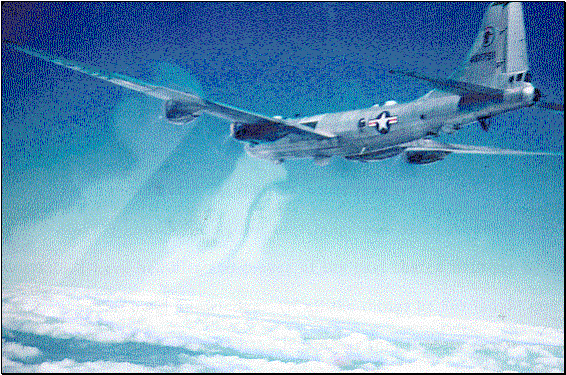
One of the 28th Bomb Squadron B-29’s inbound to the target.
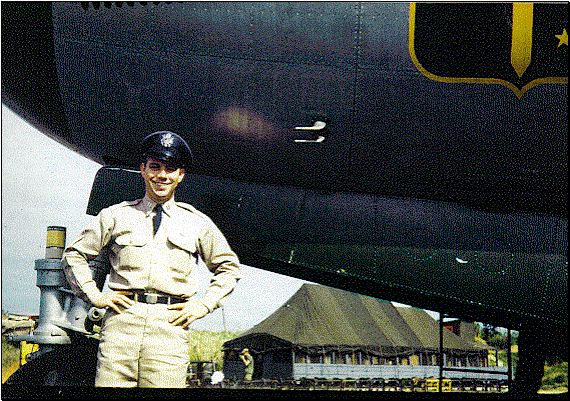
The new Captain Mitchell, standing in front of his B-29,
“Persuader”, in his new USAF uniform.
The army garb is gone!
Bourgy,
having returned from his emergency leave, remained behind to complete his tour,
as did the bombardier. Tony though was allowed to come with us.
I was glad my combat tour was
completed and happy to be returning home to my family. As I headed toward the
States and an assignment in the Strategic Air Command, I had a chance to
reflect on all that had happened.
I had completed 71 combat missions
this tour. Our crew had established an enviable record of mission completions
and bombing accuracy in the Group despite the many anxious moments caused by
enemy fighters, accurate flak and severe weather. Unfortunately that was not
the case for all the crews in the Group. Overall, the Group had lost five
aircraft and four crews.
It had been a long year, but an
interesting one.