H-1926WK-COM.DOC
The Comstocks by Dr Warren Kump
COMSTOCK
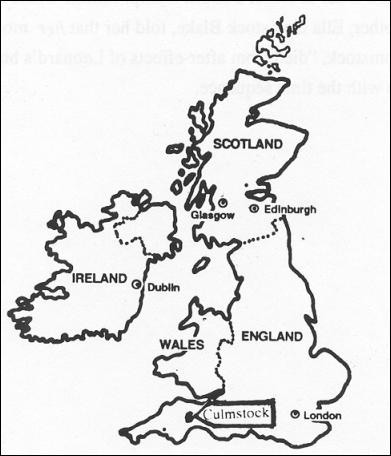
The name "Comstock" is a place name originating with the English village of Culmstock, Devonshire, apparently an early seat of the family. The village is located about ten miles south of Taunton and ten miles east of Tiverton. It is situated on the bank of the River Culm from which it derives its name, along with a reference to the stock or stockade, once maintained during the Middle Ages for protection from robbers and wild beasts. Hence the place is called Culm stock. 1
Population of the village reached 2000 in the 18th century with the advent of the Industrial Revolution when a woolen mill was built there, but the mill closed in 1870, and population has declined to less than a thousand at the present time. 2 Culmstock remains off the beaten path and relatively untouched by tourism. A few thatched roofs are still to be seen, and a bridge over the Culm, still in use, dates from the 1400's. 3

Figure 217: The thatched roofs of
Culmstock. The bridge over the River
Culm at left dates from the 1400's.
The first church was erected at Culmstock about the year 600 AD. Parts of the present All Saints Church were built around 900 AD, and the edifice was enlarged about two hundred years later. 1 The greatest treasure in the church is a Pre-Reformation embroidery which somehow survived the depredations of Henry VIII's officers. The exquisite detail of this 500 year old needle work depicts saints, apostles and martyrs on the borders, the Blessed Virgin surrounded by angels in the center, and Christ in Majesty at the top left corner, but originally in the center.
The most famous object at Culmstock is the yew tree growing from the tower of All Saints Church. The tree is thought to be about 200 years old. The trunk is 18" in girth, and the roots spread along the tower battlements on the south and east sides, drawing nourishment from the lime content of the mortar. During a drought in 1976 the tree was faithfully watered by volunteers. 4
Interestingly, Culmstock lies less than 50 miles, as the crow flies, (although separated by the Bristol Channel) from Glamorganshire, the early home of the Bobbitts.
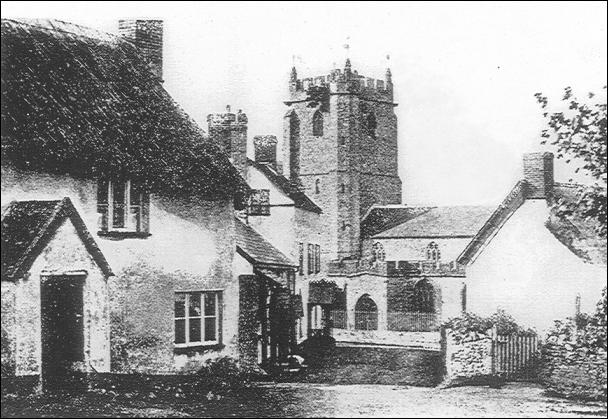
Figure 218: All Saints Church at Culmstock,
showing the yew tree growing at the top of the tower
The Comstock Lineage of Julia (Comstock) Bobbitt
|
William Comstock |
1595?-1683? |
Elizabeth Daniel |
|
Daniel Comstock |
1630-1683 |
Paltiah Elderkin |
|
Samuel Comstock |
1673-1757 |
Martha Jones Whittlesey |
|
Gideon Comstock |
1708-1747 |
Hannah Allen |
|
Rufus Comstock |
1730?-1821 |
Mary Fargo |
|
Rufus Comstock, Jr. |
1765-1820 |
Alice Baker |
|
Rufus Comstock, III |
1809-1890 |
Esther Griffin |
|
David Comstock |
1831-1875 |
Mary Amarilla Morgan |
|
Julia Lucy Comstock |
1865-1936 |
Francis Marion Bobbitt |
William Comstock
William Comstock (1595?-1683?) arrived at the Massachusetts settlements about 1635, probably with his second wife Elizabeth and four or possibly all five of his children. The choice of New England, rather than Virginia, indicates that the family had probably broken with the Established Church of England and embraced one of the many religious factions which made up the Puritan movement. The family lived briefly near Watertown, Massachusetts, but soon moved to Wethersfield, Connecticut. The reason for the move can only be conjectured, but history records that many of the early Connecticut settlers had left the rigid, judgmental Massachusetts society in search of political and religious freedom. Wethersfield, Hartford and Windsor united in 1636 to form the Connecticut Colony, a place noted for its support of such freedoms.
While attractive because of the freedoms it offered, Connecticut was still a frontier establishment subject to the threat of Indian attack. The Pequot Indians of the Connecticut River Valley were the most feared of all the tribes in the area, and war with the settlers broke out in 1636.
Ninety Connecticut men were mobilized and put under the command of an experienced army officer, Captain John Mason. Twenty-six of the men were from Wethersfield, and William Comstock was among them. 1 The colonists were joined by nearly a hundred Indians of the friendly Mohegan tribe and about five hundred Narragansett warriors.
The main fort of the Pequots was a circular wall of heavy log palisades, and its two narrow entrances were blocked by piles of brush and branches. Inside were the Indians' huts, with roofs of straw mats.

Figure 219: This
fanciful contemporary map illustrates the attack on the Pequot fort by the
Connecticut men, including William Comstock and led by Captain John Mason. The fort was located near the present site
of New London, Connecticut.
Just before daybreak one morning in the spring of 1637 the colonists' army attacked the Pequot fort. Captain Mason divided his men into two groups, each to storm one of the entrances. The group commanded by Mason rushed the northeast or main entrance, taking the Indians completely by surprise and driving them toward the other entrance where they were met by the second group under the leadership of Captain John Underhill. The Pequots were so dazed and disorganized they were unable to put up much of a fight against the whites and their Indian allies. The huts with their straw roofs were set afire by the attackers, trapping some of the Pequot women and children inside. Within an hour the entire fort and village was a mass of embers. A primitive map produced shortly after the attack (fig. 219) illustrates the action.
Captain Mason reported that between six and seven hundred of the Pequots were burned alive or otherwise killed, seven taken captive and seven managed to escape. The military power of the Pequots was broken forever. Cotton Mather, the prominent Puritan preacher, wrote that the colonists thought the burning of the Indians "a sweet sacrifice" and gave "the praise thereof to God." Two of the colonists were killed in the one-sided battle and about twenty wounded. 6
Around 1650, thirteen years after the battle (or massacre) of the Pequot, William Comstock, now about 55 years of age, received a grant of land near the site of the former action, located at the present day New London, Connecticut. He moved and made his home there. That same year he agreed to cooperate with a John Winthrop to establish a water powered grist mill. That mill still stands and is a prominent tourist attraction at New London.
When he was sixty-six years old William Comstock was elected church sexton, his assigned tasks being "to order youth in the meeting house, sweep the meeting house and beat out dogs," at a salary of 40 shillings per year. He was also to dig all graves and to receive additional income at a rate of four shillings for an adult's grave and two shillings for a child. With his livelihood thus assured he outlived his wife and survived to old age, residing on Post Hill near the north comer of Williams and Vauxhall Streets in New London.1

Figure 220: The Winthrop/Comstock Mill at
New London, Connecticut, dates from 1651.
Daniel Comstock (1630-1683)
William Comstock's third son Daniel was born in 1630 in England and came to Massachusetts with his parents at about age five. In 1646 when he was sixteen years old he received a grant of 25 acres of land at Providence, Rhode Island. In spite of his early experience as a landholder he remained quite youthful and subject to childish pranks. When he was eighteen years of age he was arrested at Providence along with some other young men for giving a false Indian alarm. At a more mature age 23 he married Paltiah Elderkin of Providence and applied himself to farming in the New London, Connecticut, area, a pursuit he continued for the rest of his days.
The greatest excitement of his life was his service as a volunteer in the Narragansett War in 1676 when he was 46 years old. The background of the war was the rapid growth of the British colonies along the eastern seaboard which were occupying the land and threatening the lifestyles of the native Americans. Because of continued immigration and a prodigious reproductive rate there were already sixty thousand colonists in New England as compared to approximately thirty-six thousand Indians.7
The Wampanoags, who had once befriended the Pilgrims, and the Narragansetts, who were the colonists' allies in the Pequot War, now joined forces against the whites. Their leader was Metacomet, better known as King Philip, and the ensuing conflict has come to be known as King Philip's War.
The decisive battle was fought in December, 1675, when five companies of soldiers from Connecticut and eight from Massachusetts attacked the Narragansett stronghold in the frozen Great Swamp of Rhode Island where about two thousand Indian men, women and children were sheltered inside a palisaded enclosure. The battle raged for three hours during which time more than a thousand Narragansetts, were killed and at least two hundred colonists.
Some of the Indians escaped and joined others from Massachusetts to continue the war through much of 1676. It is not clear whether Daniel Comstock was present at the major action in the Rhode Island Great Swamp, but he did serve with the armed forces of Connecticut until August, 1676, when King Philip was killed and hostilities ceased.1, 6, 7
After the war Daniel resumed his life as a successful farmer and father of eleven children. He died in 1683 at age 53 and was buried in the family cemetery located on one of his farms near Uncasville, about five miles up the Pequot (now the Thames) River from New London. To his survivors he left '350 acres of land and 221 pounds, 17 shillings and 6 pence. At the time of his death his youngest child was Samuel, age ten.

Figure 221: The
Colonies of Connecticut and Rhode Island. The Narragansett stronghold was
located in the Great Swamp of Rhode Island about thirty miles from New London,
Connecticut.
Samuel Comstock (1673-1757)
Samuel Comstock was only ten years of age when his father died. He lived with his mother until he reached adulthood, residing at Montville, Connecticut, near New London, all his life. In 1699 at age 26 he married Sarah Douglas. She died only five years later, on April 1, 1704, after bearing sons in 1701 and 1703. He later married a widow, Mrs. Martha Jones Whittlesey, two years his senior, of Lyme Connecticut. She bore him seven more children, the second being Gideon, born in January, 1708. She died in 1756, the year before his own death.
As were his father and his grandfather before him, he was a member of the military. His leadership qualities are evidenced by his appointment as Lieutenant of North Company in New London in 1719 and Captain in 1730. There were no major military actions during his tenure. He was buried in the Society burying ground on Raymond Hill.
Gideon
Comstock (1708-1747)
Gideon Comstock, born in January, 1708, was the fourth son of Samuel Comstock and the second son born to him by his second wife, Martha Jones Whittlesey Comstock. Gideon married Hannah Allen and lived at Montville, Connecticut, just north of New London. He and Hannah had seven children, the fourth being a son, Rufus, born about 1730.
Gideon Comstock was the fourth in his American line to join the military. On July 9, 1746, he enlisted in the colonial army during King George's War, the third in the long series of conflicts we now know as the French and Indian Wars. He attained the rank of sergeant in Captain Robert Denison's company, a unit organized for an expedition against the French in Canada. He was 38 years old.
The wars were actually extensions of European wars, but they also grew out of British and French competition to extend their possessions in North America, mainly because of the lucrative fur trade. They began in 1689 and continued intermittently for 70 years when the British finally took Montreal. King George's War, the one in which Gideon Comstock took part, lasted from 1744 to 1748. The most important event of that war was the siege and capture by colonial troops of the great French stronghold of Louisbourg on Cape Breton Island in 1745. That siege of Louisbourg cost two to three thousand lives, but the result was nullified when the fortress was returned to the French by the European Treaty of Aix-la-Chapelle.5
Gideon Comstock fell out of a canoe and drowned March 17, 1747. He was only 39 years old. Of his seven children the youngest was 13 at the time of his death.
Rufus Comstock (1730?-1821)
Rufus Comstock was the fourth son of Gideon and Hannah (Allen) Comstock. He was married twice, his second wife being Mary Fargo, the name of his first wife unknown. He was the first of his American line to live away from the vicinity of New London, Connecticut, having moved to the village of Lenox in far western Massachusetts near the border with New York.
As a citizen of Massachusetts he was required by law to possess a gun and its proper accessories, including ammunition and, along with every other man between the ages of sixteen and sixty, to be enrolled in the militia company of his own township. The militia organization provided rudimentary military training, but after the beginning of the Revolutionary War volunteers were enlisted into regiments for a term of eight months. An army of 13,600 Massachusetts volunteers was quickly enrolled, and Rufus Comstock, already well into his forties, was one of them.
The Massachusetts troops wore mostly civilian clothes and armed themselves with whatever antique muskets, fowling pieces or stolen British military weapons they could lay their hands on. Some carried haversacks and rolled blankets. Rifled gun barrels were unknown in New England, and only a few of these raw infantrymen had bayonets. 8 Rufus Comstock was fortunate to survive the war.
He had seven sons and three daughters, some born before, some after the war. His third son and fourth child was Rufus Comstock, Jr. Rufus died in 1821, having outlived his son, Rufus, Jr., by one year.
Rufus Comstock, Jr. (1765-1820)
As a young man this Rufus Comstock learned the trade of a cooper, a maker of wooden barrels and tubs. In his day these durable containers were the most widely used of all manner of receptacles for liquids, solids and produce of all kinds, and his products undoubtedly found a ready market.
He married Alice Baker, and they
had thirteen children, including a set of twins. Their youngest son was Rufus Comstock III, born March 17, 1809.
Rufus and Alice Comstock moved from Lenox, Massachusetts, to Plattsburgh, NY., about 1803. The town was situated by a bay on the western shore of Lake Champlain. Just ten years after the Comstocks moved there Plattsburgh became the site of one of the important battles of the War of 1812, the final confrontation between the fledgling United States and British Canada.
The lake lies between upstate New York and Vermont and empties north into the Richelieu River, which in turn flows into the St. Lawrence between Montreal and Quebec. To the south there are only a few miles to the headwaters of the Hudson River which flows in a southerly direction to the sea at New York City. In the early Nineteenth Century there were few passable roads in the area, so these waterways formed a natural invasion route that could be used to ferry troops and supplies in either direction, to or from Montreal and Quebec on the north or New York City on the south. Whoever controlled these waters, particularly Lake Champlain, controlled the entire region militarily and had within its grasp the ability to isolate New England from the rest of the United States.
The Americans and their British adversaries worked feverishly for two years preparing for a showdown. At the south end of the lake the Americans felled timber, hauled in cannon and other ordnance and hurriedly constructed a fleet of four ships and ten smaller vessels. Local workmen sawed the planking, and local blacksmiths hammered out the necessary bolts and nails. Rufus Comstock may well have supplied tubs and barrels.
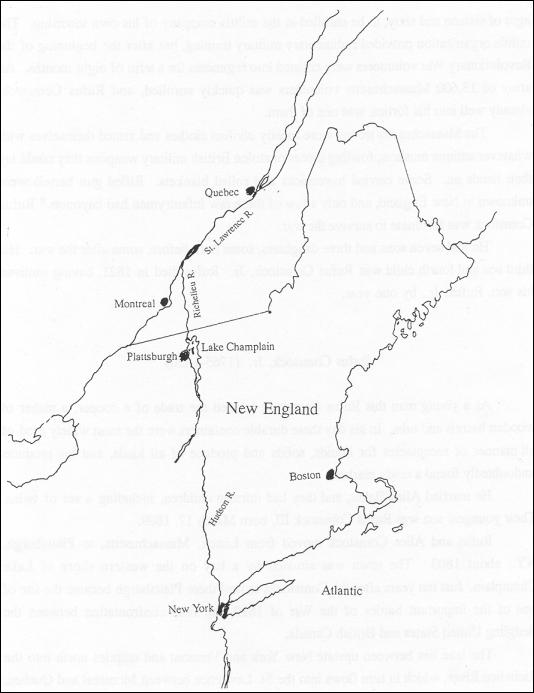
Figure 222: The
strategic importance of Lake Champlain is shown on this map. For the British the lake was the path to the
Hudson River Valley and New York City.
Control of the lake and the valley would isolate New England from the
rest of the United States.
Meanwhile the British were floating supplies up the Richelieu River and building a fleet of corresponding size at the north end of the lake. Both sides were training crews at the same time their crafts were under construction.
In August, 1814, an invading British army crossed over from Canada and began to march down the western side of Lake Champlain to attack Plattsburgh and other small New York communities along the shore. The American fleet under Master-Commandant Thomas Macdonough countered the move by sailing into Plattsburgh Bay, commanding the town and challenging the British fleet. Macdonough stationed his ships broadside across the mouth of the bay, so that the British had to approach him head on. He also arranged the anchors and cables of his flagship to allow it to be drawn about to present a fresh broadside while the outcome of the engagement was still in doubt. As a result of his brilliant tactics the British fleet was so damaged that it was forced to surrender. The date was September 11, 1814. The advancing British army on the western shore, fearing that its supply lines would be cut by the victorious American fleet, retreated back into Canada.
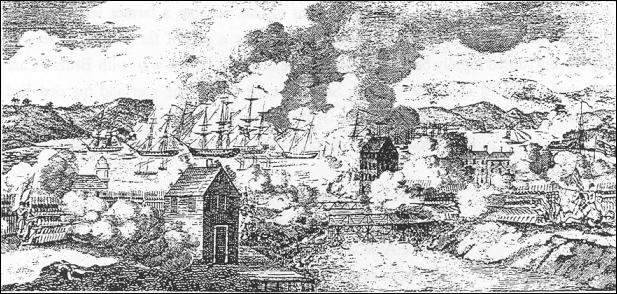
Figure 223: This
heroic engraving of the Battle of Plattsburgh was produced shortly after the
battle. It shows the American ships stationed across the mouth of the bay. The infantry battle between American troops
(right foreground) and the British on the left is apocryphal, since the British
never entered the town. Although Rufus
Comstock, Jr, operated a cooperage in Plattsburgh at the time his whereabouts
during the battle are unknown.
Macdonough has been pronounced the ablest American naval leader developed by the war, and the Battle of Plattsburgh, one of the most decisive battles ever fought by the US Navy.5,9,10,11 What the Comstocks thought of such goings on just off their town's shore has not been recorded.
Rufus Comstock, Jr., died October 20, 1820, and his wife Alice died nine years later.
Rufus III and Esther, David and Mary
The third Rufus Comstock in this line was born March 17, 1809, at Plattsburgh, NY, the ninth son and twelfth child of Rufus, Jr., and Alice (Baker) Comstock. He did not pursue his father's trade as a cooper, but instead became a farmer in St. Lawrence County ninety miles west of Plattsburgh. The area was a part of far northwest New York state being settled rapidly because the favorable outcome of the war with British Canada had made the area more secure.5 In St. Lawrence County he met and married Esther Griffin, daughter of Charles and Eunice Griffin of nearby Pierrepont, New York.
All eight of Rufus and Esther's children were born there in St. Lawrence County. 12 They were:
David, born September 25, 1831
Cornelius, born September 26, 1833
Emeline Amelia, born March 25,1839
Oren, born January 30, 1840 (died in infancy)
Mary Ann, born April 14, 1841 (died in infancy)
William, born May 4, 1842
Lucy, born May 4, 1848
Annette, born April 11, 1850

Figure 224: David and Cornelius, sons of
Ruftis Comstock, III
Rufus farmed in the St. Lawrence lowlands for more than twenty years; then in 1854 as the country's population shifted westward he moved his entire family to a farm near Ripon, Wisconsin. By then the oldest son David was 23 years old and married to Mary Amarilla Morgan, a St. Lawrence County girl. The young married couple moved to Wisconsin along with the rest of the family. The other siblings ranged in age from four to twenty.
On July 15, 1855, Rufus and Esther gained their first grandchild when a baby boy was born to Mary and David. They named the baby Stephen Preston Comstock, honoring Mary's father, Preston Morgan. The little boy died September 10, 1857, at barely more than two years of age. A year later, on December 6, 1858, a second son was born. They named him Arthur Eugene.
The stay in Wisconsin was brief., as the family decided to move on to Iowa in 1858.13 However, one of the sons, Cornelius, was now age 25, had put down roots in Wisconsin and elected to stay. Three years later when President Lincoln called for volunteers Cornelius responded. He served throughout the Civil War as a sergeant in the 32nd Wisconsin Infantry Regiment, but after the war, still unmarried, he rejoined the family in Iowa.
The new home in Iowa was an 80-acre farm on the Shell Rock River three miles south of the village of Marble Rock, Floyd County. The legal description was S 1/2 of SW 1/4, Sec. 27, Union Township. There was also a two-acre plot of timber near by to supply wood for heating. Rufus paid $487.50 for the farm and timber. The deed was finally recorded on January 10, 1860. 14 The land was, and still is, a broad level expanse of some of the richest black soil in the world.

Figure 225: This
map from an 1895 atlas shows considerably more development than was present
when the Comstocks arrived in 1858.
There were no railroad, no Subdistrict Number 6 School and no bridge
across the Shell Rock River
The population of Floyd County was only about 4000 when the Comstocks arrive there in 1858. Nearly all the inhabitants lived on small farms such as the Comstocks', because all the farming operations had to be performed by hand or with a few draft animals. In the early years corn was planted with a hoe, small grain by hand, and cultivating was done with a walking cultivator or a hoe. Corn was cut and shocked by hand while oats were either fed in the bundle or threshed with a flail. Potatoes were also an important crop in the county for many years. Hogs were always butchered in the winter, so the meat could be frozen and thus preserved while the long drawn out routine of processing could be completed. 15
In those early times there was no bridge across the river, so the small portion of the Comstock farm which lay on the east side was of little use to the family. Furthermore the only way to reach the village of Marble Rock was to walk across the river on a crude rock dam which had been constructed a half mile upstream near the village of Aureola on the west bank. It was a precarious trip to pick one's way along the rough dam at any time, but during periods of high water it was impossible. Horses and wheeled vehicles could never make it, even in the best of times.
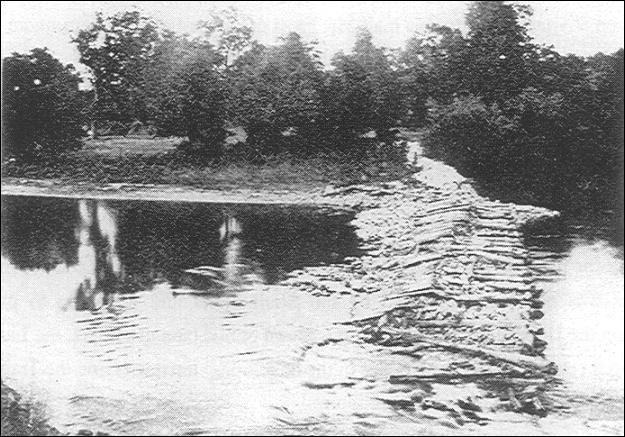
Figure 226: The
crude rock dam at Aurelia is shown here. On the near shore was a grist mill
with an under-shot water wheel. On the far shore was a lumber mill powered by a
strange water wheel, a log pivoted at each end with steel blades driven in at
an angle. The water rushed lengthwise of the log.
The dam created a mill race for a flour mill on the west bank at Aureola and another mill race for a lumber mill on the east bank just upstream from Marble Rock. The flour mill was a great convenience for farmers living west of the river, for they had previously had to haul their grain many miles to be processed into flour. The river made Marble Rock relatively inaccessible from the west and allowed the tiny town of Aureola to survive for a few years until a proper bridge could be constructed. The barrier created by the river even required a separate cemetery, the West Side Cemetery.
The lumber mill on the Marble Rock side of the river was a success because of the groves of beautiful trees to the north of town, trees yielding woods of all varieties, including fine hardwoods. As a result there were houses in town built of maple and even houses of solid black walnut! The fine woods eventually became scarce, and little more than a century later, in 1967, a German firm paid $1800 for a single black walnut tree growing at Marble Rock.
Mr. Joseph Frost was the first postmaster at Marble Rock. The mail was brought by stage from Waverly, Iowa, once a week and was kept in a box under the postmaster's bed. When anyone called for his mail Mr. Frost drew the box out from under the bed and looked through the letters for anything addressed to the postal patron. 16
On December 26, 1860, the day after Christmas, Ella Amarilla Comstock was born to David and Mary. She was the first of the family to be born in Iowa. She was also the last to be born before the war which changed so much of American history.
Southern politicians had long resisted passage of measures that would result in development of the territories west of the Mississippi, because they knew these areas were not suited for plantation life and slave labor. When the South seceded from the Union Congress was no longer impeded by the Southerners and was able to pass in quick succession the Homestead Act providing western public land to settlers, the Land Grant Act providing for colleges and universities in the developing territories and the Transcontinental Railroad Act providing for an infrastructure. 17
A more immediate and personal effect of the war was the induction of young men into the army. David, a family man with children, did not enlist, but Cornelius had already volunteered and was serving in the 32nd Wisconsin Infantry. When President Lincoln called for volunteers 36 young men from the Marble Rock area responded. This filled the township's quota, and no draft was ever ordered there. Thirteen of the Marble Rock men died in the war. 16
William Comstock (they called him "Will") had a most harrowing army career. He enlisted in Co. G, 32nd Iowa Infantry Regiment in August, 1862. He was 21 years old. He took part in a number of actions and was then wounded and taken prisoner by the Confederates April 9, 1864, at the Battle of Pleasant Hill in Louisiana. When he had partially recovered from his wound he was paroled and allowed to come home. In less than a year he was exchanged for a paroled Confederate and re-enlisted, finally being discharged in August, 1865.13
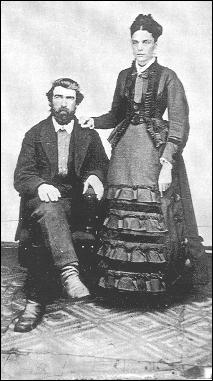
Fig 227: David and Mary Amatilla Comstock
Cornelius, when discharged from the 32nd Wisconsin, came home to the family in Iowa at the end of the war, but died November 9, 1865.18 He was 32 years old. His grave in the southwest corner of the West Side Cemetery was the first for the Iowa Comstocks, eventually to be joined by many others.
Another child was born to David and Mary on April 14, 1863, a girl they named Zera Rozella. Two years later a third daughter, Julia Lucy, was born June 16, 1865. As a young man with a growing family David naturally developed a keen interest in primary education. In 1864 he was elected president of the township school board. There were ten sub-districts in Union Township, each eventually having its own school, a one-room structure in most cases. Sub-district #6 was built in 1872 at a site immediately across the road to the south of the Comstock farm at a cost of $500.19 A convenient site for his children's school was apparently the only compensation David received for his work on the school board.
Little Zera died on February 25, 1866, not yet three years old. She probably died of one of the childhood diseases which were so lethal in those days before immunization and antibiotics. But a year later there occurred an even more tragic sequence, the deaths of an infant and the young wife and mother. The baby boy they named Leonard was born June 27, 1867, and, as a complication of his birth, Mary Morgan Comstock died July 8, eleven days later. The baby died also. David, the young father, was left with three children, ages 8, 6 and 2.
It was then that the strength of the Nineteenth Century extended family became manifest. Grandparents, uncles and aunts assumed responsibility for the motherless children, providing them with love and emotional support as well as food, shelter and the other necessities. At first the children lived with the grandparents Rufus and Esther, but as young uncles and aunts married they opened their homes to the children as well. Will married Mary Ann Yerrick, a 20-year old neighbor girl on May 30, 1867. Lucy married John Gurnmere July 20, 1867. Emeline married Nicholas Rosencrans December 30, 1868. "Uncle Nick and Aunt Em" were especially loving and supportive of David's and Mary's children.
On December 23, 1868, a year and a half after Mary's death, David married again, this time to Augusta Crowell, a girl still in her teens. 20 David was 37, and his eldest child Arthur was 10. The bride was too young to mother David's children; thus their care continued to rest with the extended family. The 1870 US Census showed Arthur and Julia to be living in their father's household and in that of their grandfather as well. This presumably means that they were included twice in that year's national head count. On November 17, 1869, Augusta Crowell Comstock gave birth to John William, a half- brother to David's other children. Two years later, on April 5, 1871, David's youngest sister Annette, the last of the siblings to marry, was united with William Crabtree.
Development of Union Township accelerated during the decade beginning 1869. That year a 210 foot single span bridge, wood with iron brace rods, was built across the Shell Rock River at Marble Rock at a cost of $5,400. In 1876 it was replaced by an iron bridge composed of two spans, each 122 feet in length and resting on a stone pier placed in the center of the river. In 1871 the Burlington, Cedar Rapids and Minnesota Railroad was built through Marble Rock, bypassing Aureola and connecting the C.B.&Q. with the Minneapolis and St. Louis Line at Albert Lea, Minnesota.16
The bridge made Marble Rock more accessible to the Comstocks and others living west of the river, and the railroad provided a commercial shipping point for farm products. Manufactured goods and other items from the outside world became available as a cash economy gradually replaced the former subsistence farming in Union Township.

Figure 228: Marble Rock, Iowa, in 1895. The
town has changed little since that time.
The bridge and the railroad at Marble Rock meant a slow death for Aureola, its competing village on the other side of the river, and presumably assured the growth and prosperity of Marble Rock. Will Comstock bought lots 4 and 5 of block 3 in Marble Rock in 1871, apparently as an investment, and sold them a year later. In 1872 Rufus purchased the east halves of lots 7 and 8 of block 5 as a retirement home in Marble Rock. David, on the other hand, disregarded the movement to Marble Rock and on November 22, 1873, purchased for $60 lots 7 and 8, block 13, in Aureola. He still owned the lots at the time of his death. Aureola gradually faded away and disappeared without a trace.
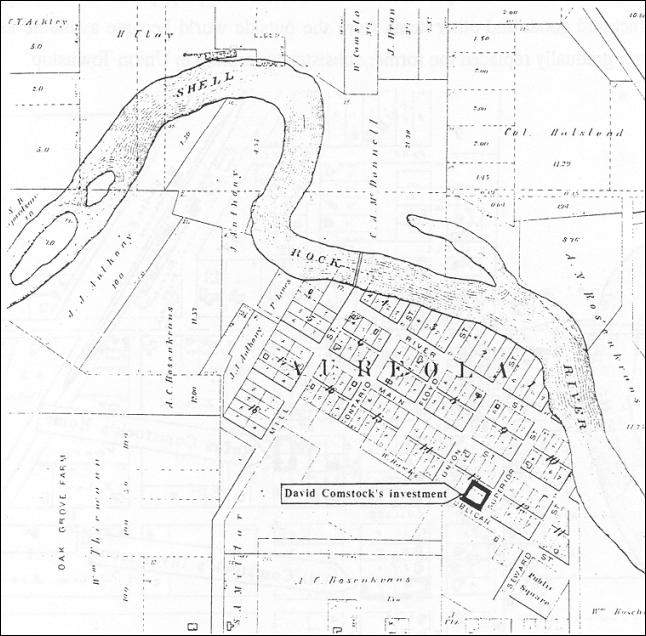
Figure 229: Aureola in 1895. The town has
since disappeared with barely a trace remaining.

Figure 230: The estate of David Comstock
consisted of $350 of personal property plus the two lots in Aureola.
Will Comstock managed one other real estate venture in the 1870's. In 1873 he and his wife Mary moved to Osborne County, Kansas, where they were able to homestead some public land for a farm near the town of Downs. They "proved up" on the homestead, then sold it and returned to Marble Rock in 1881. 13
Tragedy continued to follow the family. On June 20, 1874, Arthur Comstock, age 15 and the only remaining son of David and Mary, a young man who had lived nearly all his life near the Shell Rock River, died of drowning. 24 Only a year later, on September 14, 1875, his father David was killed by noxious gas while cleaning a well. Ella, age 14, and Julia, 10, were left orphans dependent on grandparents, aunts and uncles.
Augusta Crowell Comstock, the young widow, moved with her son to Nora Springs, a village about twenty miles north of Marble Rock in 1879.14 Eventually she married Enos Lane and moved to La Cygne, Kansas. After his death she returned to Iowa. Her son John William Comstock married Alzada Baker, had four daughters and died at La Cygne in 1939. 21
By 1880 Rufus Comstock, age 71, had left the farm and was working as a storekeeper in Marble Rock. 22 Esther was also 71 years old and now seriously ill. The next year their daughter Emeline and her husband Nicholas Rosencrans rented out their own farm and moved in to Marble Rock also. Nicholas formed a partnership with Samuel Rex in the butcher and meat market business, while Emeline operated a successful millinery shop. 19

Figure 231: The Rufus Comstock House in
Marble Rock
Nicholas and Emeline were childless except for a 16 year old adopted daughter Hattie. 22 As her grandmother Esther's health deteriorated Julia spent more and more of her time with "Uncle Nick and Aunt Em." Ella was already teaching at subdistrict # 4 school19 just west of Aureola and boarding at the Willard Kinny household 22 (although she did not receive her teachers certificate until three years later).
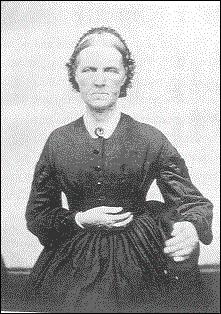
Fig 232: Esther Griffin Comstock, 1809-1882
Most of the extended family were now living in town, the Crabtrees operating a store on Main Street. Population of Marble Rock was 409, and there were three churches, three general stores, two hardware stores, two barber shops, two physicians and one undertaker. 16 Julia was attending the large frame school of which the town was so proud (the building cost $4000 and would accommodate 200 students). She received her teachers certificate at age 17. 19
After three years of declining health Esther Griffin Comstock died January 23, 1882, at age 72. Dr. Haynes declared the cause of death to be "consumption" (pulmonary tuberculosis) of three years duration.14 Interestingly the bacillus which causes tuberculosis was first identified in Germany the very year Esther died. Dr. Haynes' diagnosis was made on circumstantial evidence, but was probably correct. It is fortunate that no other member of the family was infected.
In the years that followed their grandmother's death Ella and Julia entered upon their adult lives. Ella married James Ellis Blake (they called him Ellis) on March 16, 1884. Julia taught school in the Marble Rock vicinity for a time, then in 1889 she traveled to western Nebraska to visit her Aunt Lucy Gurnmere and to teach a term of school. She met a young farmer there, Francis Bobbitt, and married him March 20, 1890.
With advancing age Rufus had to give up his work at the store. When no longer able to care for himself he moved to the home of his daughter Annette Comstock Crabtree. On April 8, 1893, at age 84 he suffered "an instantaneous death of heart failure", according to his doctor, I W. McLery. 14 The cause of death was probably ventricular fibrillation. Funeral services were conducted at the Baptist Church in Marble Rock on April 10, Rev. Brush officiating 23 Rufus was laid to rest among family members in the West Side Cemetery.
Summing Up
The Comstocks, farmers and artisans, moved from Devonshire to New England about 1635. They lived for four generations in the vicinity of New London, Connecticut, joining or witnessing various military conflicts. They moved westward by increments along with the general population drift, reaching Floyd County, Iowa, in 1858. Members of far removed branches of the family gained recognition, one as the discoverer of a famous silver lode, another as a renowned buffalo hunter and frontier character. The Floyd County Comstocks, however, died out gradually and in relative anonymity through premature deaths, childless marriages and dispersal. Today the only Floyd County Comstocks are found in the West Side Cemetery.

Figure 233: The Comstock graves at the West
Side Cemetery, Marble Rock, Iowa.
References
1. Unless otherwise annotated this and all other information about the Comstock family is from Comstock, John Adams, A History and Genealogy of the Comstock Family in America. Commonwealth Press, Inc., Los Angeles. 1949
2. Taylor, Anthony, Culm Valley Album. Penwell Ltd., Parkwood, Callington, Cornwall. 1987
3. Lee R. Kump H visited there in June, 1994
4. Holmes, Muriel, A Short History and Guide to the Parish Church ofAll Saints, Culmstock Devon. Culm. Valley Activities Centre. Uffculme, Devon. 1989
5. The World Book Encyclopedia. Field Enterprises Corp. Chicago. 1969
6. Alderman, Clifford Lindsey, The Colony of Connecticut. Franklin Watts. New York. 1975
7. Wood, James Playsted, Colonial Massachusetts. Thomas Nelson, Inc. New York. 1969
8. Ward, Christopher, Ae War of the Revolution. Macmillan Company, New York. 1952
9. Forester, C.E, "Victory on Lake Champlain". American Heritage, XV, December, 1963
10. Stevens, William Oliver and Westcott, Alan, A History of Sea Power. Doubleday, New York. 1942
11. Hickey, Donald R., The War of 1812 A Forgotten Conflict. University of Illinois Press. Urbana. 1989
12. There is an error in John Adams Comstock's book, A History and Genealogy of the Comstock Family in America. On page 282 is the statement that David Comstock was born at Plattsburg, St. Lawrence County, New York. Actually Plattsburg is in Clinton County. Colton and Pierrepont are in St. Lawrence County where David's parents were married and where he was born.
13. William Comstock's obituary
14. Office of the County Recorder, Floyd County Courthouse. Charles City, Iowa 50616
15. Heddens, Lois, an essay on Floyd County agriculture in the collection of the Floyd County Historical Society, Charles City, Iowa. 50616
16. Carney, Arlene, and Reams, Nancy, Our Heritage, Marble Rock Iowa. Graphic Publishing Co., Lake Mills, Iowa. 1976
17. McPherson, James M., Battle Cry of Freedom. The Civil War Era. Oxford University Press. 1988
18. Cemetery record at the Floyd County Historical Society, Charles City, Iowa 50616 19. Yhe Story of Floyd County, Iowa, 1882, a book, author unknown, in the collection of the Floyd County Historical Society, Charles City, Iowa. 50616
20. The 1870 census places Augusta's birth date in 1850, while her petition concerning the estate of her husband indicates that she was born in 1854. She was therefore either eighteen or fourteen years old at the time of her marriage to David.
21. From a letter to Ila Bobbitt Landau from Alice Comstock Hayes in 1939. Mrs. Hayes was a daughter of John William Comstock, son of David and Augusta Comstock.
22. 1880 United States Census
23. Newspaper clipping on file at the Floyd County Historical Society, Charles City, Iowa 50616
24. John Adams Comstock's book A History and Genealogy of the Comstock Family in America erroneously places the date in 1875. A newspaper account in the Charles City Intelligencer published only days after the event gives the date as June 20, 1874.